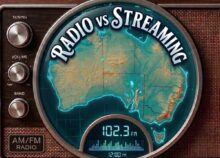

ARIA has again pointed the finger at commercial radio while the only Australian song in the current ARIA Top 40 belongs to Tame Impala, raising fresh questions about how the charts are compiled and who is really supporting local music.
by Paul Cashmere
The Australian Recording Industry Association has once again chosen radio as the scapegoat for the lack of Australian artists in the ARIA Top 40, a move that looks increasingly detached from the data and disconnected from the lived reality of Australian music audiences. With just one Australian song in this week’s ARIA Top 40, Tame Impala’s Dracula, local content accounts for a meagre 2.5 percent of the chart. That figure alone demands scrutiny, but ARIA’s response has instead been to accuse radio of systemic failure.
The comparison with radio’s own airplay data tells a very different story. Media Monitors’ Radio Airplay Chart, which tracks what Australian radio stations actually play each week, shows ten Australian songs in the Top 40 airplay. That is 25 percent of the chart, a tenfold increase on ARIA’s result. By any rational assessment, radio is delivering far more exposure and impact for Australian artists than the ARIA chart suggests.
When you look at the triple j Hottest 100 this year, 54 Australian tracks were in the Top 100 and that was compiled from 2.65 million votes.
The contradiction sits at the heart of ARIA’s credibility problem. The ARIA charts are now heavily dependent on streaming data, much of it drawn from international curated playlists dominated by global repertoire and almost entirely devoid of Australian content. These playlists are created offshore, optimised for scale, and designed to feed multinational catalogues owned by Sony, Universal and Warner. Australian artists are structurally disadvantaged before a single stream is counted.
Yet ARIA has chosen to ignore this imbalance and instead released a media statement blaming radio for the outcome of a chart system that ARIA itself controls. The audacity of that position is difficult to overstate. Radio, operating within Australian communities and responding to Australian audiences, is demonstrably playing more local music than the national chart reflects.
This is not a new problem. The absence of a published 2025 ARIA End Of Year Chart raised eyebrows across the industry. When fragments of the data became known, the explanation appeared obvious. There were no Australian acts in the Top 50, and only four between positions 50 and 100. Those four entries underline the depth of the issue.
They included Riptide by Vance Joy, a song now 13 years old, Stumblin’ In by Cyril, already two years into its life cycle, Royel Otis’ cover of Linger, originally an Irish song by The Cranberries and recorded for American radio, and Don’t Dream Its Over by Crowded House, released four decades ago. None represent a contemporary breakthrough driven by the current Australian music ecosystem. They are legacy tracks, covers, or catalogue titles, not evidence of a healthy pipeline for new local artists.
ARIA’s decision to escalate its complaints by aligning itself with the Australian Communications and Media Authority only amplifies the disconnect. ACMA’s track record in radio enforcement is well known. For years it has issued minor penalties to the Australian Radio Network over repeated breaches related to The Kyle & Jackie O Show, with little tangible effect. Within the industry, ACMA is widely viewed as a ‘toothless tiger’ of a regulator.
For ARIA to partner with ACMA and present this as meaningful reform borders on farce. Two heavily funded organisations, one overseeing a chart system that marginalises Australian artists, the other overseeing broadcast standards with minimal consequence, now positioning themselves as champions of local culture. The outcome looks predictable. There will be statements, consultations and reviews, followed by inaction.
ARIA’s own media release argues that radio quotas are failing, that Australian music is being pushed to off peak hours, and that loopholes undermine the intent of local content rules. What the statement does not address is why radio airplay data still shows ten Australian songs in the Top 40 while ARIA’s chart shows one. The evidence ARIA presents does not align with the outcomes it condemns.
Radio is not perfect, but the numbers demonstrate that it remains the most consistent mainstream platform for Australian artists. It introduces new music, sustains careers, and reflects local taste in ways global streaming playlists do not. ARIA’s charts, built on international streaming behaviour, tell a story about global consumption, not Australian culture.
ARIA is not the solution to this problem. It is central to it. Blaming radio diverts attention from the structural flaws of a chart system shaped by multinational interests and commercial partnerships. Teaming up with ACMA may generate headlines, but it will not generate Australian hits.
Until ARIA confronts how its charts are compiled, and whose interests they truly serve, Australian artists will continue to disappear from the national rankings, and radio will continue to do the heavy lifting ARIA refuses to acknowledge.
Stay updated with your free Noise11.com daily music news email alert. Subscribe to Noise11 Music News here
Be the first to see NOISE11.com’s newest interviews and special features on YouTube. See things first—Subscribe to Noise11 on YouTube
Follow Noise11.com on social media:
Bluesky
Facebook – Comment on the news of the day