
Two Solo Albums Stream For First Time As Vega Vault Project Unveils Deluxe Edition
by Paul Cashmere
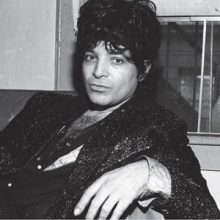
For the first time since their original release, Alan Vega’s first two solo albums, Alan Vega and Collision Drive, are now streaming worldwide, as part of a broader reissue programme from The Vega Vault Project and Sacred Bones Records. The re-releases, remastered from the original tapes, mark a significant moment for the enduring legacy of one of New York’s most uncompromising underground artists, whose influence continues to ripple through punk, electronic and experimental music.
Vega, best known as one half of the pioneering electronic duo Suicide, carved out a parallel solo career that was equally radical, but built from a very different set of instincts. While Suicide’s minimalist electro-punk was defined by icy drum machines and confrontational performance, Vega’s early solo work reached back toward rockabilly, early rock and roll, and the kind of theatrical, streetwise intensity that he had long admired in Elvis Presley.
The timing of the releases is notable. Vega’s debut solo album arrived in 1980, the same year Suicide issued Suicide: Alan Vega and Martin Rev. Vega’s solo record was not a detour, it was a deliberate reinvention. In a period when he was between Suicide recordings, he began to write and perform solo, experimenting with sound manipulation, and developing a stripped-back rock and roll record that felt both modern and retro, raw and controlled.
For the new reissue, Sacred Bones has remastered the albums from the original tapes, ensuring the sound remains as vivid and immediate as when Vega first recorded them. The packages also include previously unseen photographs, new artwork and, crucially, a companion release titled Alan Vega Deluxe Edition. The deluxe edition, available as a limited double LP, features unheard demos, previously unseen photos and reimagined artwork, including Vega’s original track sheets from his 1978 Suicide / The Clash Tour Notebook.
The demos, discovered by The Vega Vault Project’s Liz Lamere and Jared Artaud, were transferred by engineer Ted Young and mastered by Josh Bonati. They offer a rare window into Vega’s creative process during a pivotal era, when he was building a new musical identity outside of the shadow of Suicide. In the same way his visual art was layered and intentional, his approach to sound on these early solo recordings was minimalist but exacting, a careful assembly of raw material into something fiercely singular.
Vega’s self-titled debut includes the enduring anthem “Jukebox Babe,” a track that became a hit in France and remains one of the most recognisable moments in his catalogue. The album’s sound is built around stripped-down arrangements, rhythmic drive and a sense of cinematic drama. Tracks such as “Kung Foo Cowboy” and “Ice Drummer” reveal Vega’s fascination with the blues, the American south and the mythic pull of the road, while “Ice Drummer” also carries the melodic pop sensibility that would echo through his later work.
In 1981, Vega returned with Collision Drive, recorded in the same New York studio and within the same year as his debut. The album expands his palette, introducing a grittier, more layered energy. Its themes range from street life and politics to science fiction and existential longing, framed in lyrics that remain deliberately open-ended, inviting interpretation rather than explanation. The record includes the proto-punk mantra “Ghost Rider,” and the urgent, confrontational “Viet Vet,” as well as the defiant “Outlaw,” which contains the line “more more more, more for the poor,” a phrase often cited as having influenced Billy Idol’s “Rebel Yell.”
As Jared Artaud, co-producer and creative director of The Vega Vault Project, notes, Vega’s first two solo albums were born from a clear, uncompromising vision. Vega chose to produce them himself, without the involvement of Ric Ocasek, who had initially been slated to produce his solo work. Instead, Vega followed his own instincts, building a stripped-down rock and roll framework around simple, driving rhythms, while keeping the lyrical intensity and vocal distinctiveness that defined his career.
Vega’s influence has been widely acknowledged by artists across generations, from Mark Ronson and LCD Soundsystem to Trent Reznor and Jim Jarmusch. His work remains a touchstone for anyone seeking the point where punk’s raw energy meets the avant-garde, where performance art meets music, and where minimalism becomes a form of emotional overload.
These reissues do more than preserve the past, they reassert Vega’s role as a restless innovator. Alan Vega and Collision Drive remain foundational documents of outsider rock, art-punk and experimental pop, and the new editions bring them into the streaming era without diluting the ferocity that made them so influential in the first place.
Alan Vega Tracklist:
01 – Jukebox Babe
02 – Kung Foo Cowboy
03 – Fireball
04 – Love Cry
05 – Speedway
06 – Ice Drummer
07 – Bye Bye Bayou
08 – Lonely
Physical Variants: Sacred Bones Exclusive Variant – Silver & Magenta Galaxy vinyl (BE), Black (LP), Indie Retail Variant – Magenta vinyl (C3), Rough Trade Exclusive – Silver & Magenta Half/Half vinyl (RT), 8 Track
Alan Vega Deluxe Edition Tracklist:
01 – Jukebox Babe
02 – Kung Foo Cowboy
03 – Fireball
04 – Love Cry
05 – Speedway
06 – Ice Drummer
07 – Bye Bye Bayou
08 – Lonely
09 – Ice Drummer (Demo)
10 – Fireball (Demo)
11 – Speedway (Demo)
12 – Love Cry (Demo)
13 – Kung Foo Cowboy (Demo)
14 – Lonely (Demo)
15 – Bye Bye Bayou (Demo)
Physical Variants: Sacred Bones Exclusive Variant – Magenta w/ Black Splatter (BE), Indie Retail Variant – Ice blue (C3), CD