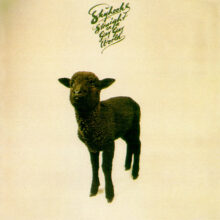

Released in August 1976, *All I Can Do* marked the closing chapter of Dolly Parton’s creative partnership with Porter Wagoner and set the stage for the commercial breakthrough that followed with *Here You Come Again* just a year later.
by Paul Cashmere
Fifty years after its release, Dolly Parton’s All I Can Do remains one of the defining transition records in her catalogue, capturing the final stages of her country music foundation before the crossover success that transformed her into one of the biggest stars in popular music.
Released by RCA Victor on 16 August 1976, All I Can Do was Parton’s seventeenth solo studio album and the last of her solo releases to involve longtime collaborator Porter Wagoner as co-producer. Coming after the public and legal fallout surrounding the end of their professional partnership, the album effectively closed one of the most significant creative relationships in country music while signalling Parton’s growing independence as a songwriter, performer and producer.
The album also arrived just one year before Here You Come Again, the landmark 1977 release that broadened Parton’s audience far beyond country music and established her as an international pop and country star. While Here You Come Again would become the commercial breakthrough, All I Can Do documented the artistic confidence that made that success possible.
Parton wrote eight of the album’s ten songs, reinforcing her reputation as one of Nashville’s most accomplished songwriters. Alongside her original material, she recorded two carefully chosen covers. One was Emmylou Harris and Bill Danoff’s emotional Boulder to Birmingham, while the other was Merle Haggard’s Life’s Like Poetry. The combination reflected Parton’s willingness to interpret the work of respected contemporaries while continuing to develop her own songwriting voice.
Several tracks also reflected the changing circumstances surrounding her career. Shattered Image was widely interpreted as a response to the intense media attention Parton was attracting at the time, with lyrics encouraging critics to examine their own lives before judging others. More than two decades later, she revisited the song for her 2002 album Halos & Horns, giving it renewed relevance for a different stage of her career.
Another track, The Fire That Keeps You Warm, had previously appeared as a duet with Porter Wagoner on the 1974 Porter ‘n’ Dolly album, illustrating the musical overlap between their partnership and Parton’s increasingly independent solo work.
Commercially, All I Can Do performed strongly on the American country charts. The album reached No. 3 on Billboard’s Hot Country LPs chart after spending 25 weeks on the listing. Its title track became the standout single, climbing to No. 3 on the Billboard Hot Country Singles chart while reaching No. 1 on Canada’s RPM Country chart.
The earlier single Hey, Lucky Lady reached No. 19 in the United States and No. 11 in Canada, while Shattered Image later received a UK single release but did not chart.
Industry recognition followed with a nomination for Best Country Vocal Performance, Female at the 19th Annual Grammy Awards, acknowledging Parton’s continued standing as one of country music’s leading vocalists during a period of significant artistic change.
Contemporary reviews reflected that momentum. Billboard praised the balance between Parton’s songwriting and vocal performances, highlighting Boulder to Birmingham as a particularly heartfelt interpretation while suggesting the album contained several potential hit singles. Cashbox noted Parton’s move towards a broader contemporary country sound while recognising the strength of her original compositions.
The album’s legacy has continued to evolve. In 2002, country rock group Pinmonkey recorded Falling Out of Love with Me, with Parton contributing harmony vocals, introducing one of the album’s lesser-known songs to a new audience. Five years later, All I Can Do received its first CD reissue when it was paired with the 1977 album New Harvest…First Gathering. The reissue also marked its digital release, making the album more widely available than at any time since its original vinyl pressing.
Looking back five decades later, All I Can Do occupies an important place within Dolly Parton’s catalogue. It closed the Porter Wagoner era, showcased her confidence as both songwriter and producer, and bridged the gap between her traditional country success and the international popularity that followed with Here You Come Again. While often overshadowed by the blockbuster albums that came afterwards, its influence can be heard in the creative freedom and musical direction that defined the next chapter of Parton’s remarkable career.
Tracklisting
All I Can Do
The Fire That Keeps You Warm
When the Sun Goes Down Tomorrow
I’m a Drifter
Falling Out of Love with Me
Shattered Image
Boulder to Birmingham
Preacher Tom
Life’s Like Poetry
Hey, Lucky Lady
Stay updated with your free Noise11.com daily music news email alert. Subscribe to Noise11 Music News here
Be the first to see NOISE11.com’s newest interviews and special features on YouTube. See things first-Subscribe to Noise11 on YouTube
Follow Noise11.com on social media:
Bluesky
Facebook – Comment on the news of the day