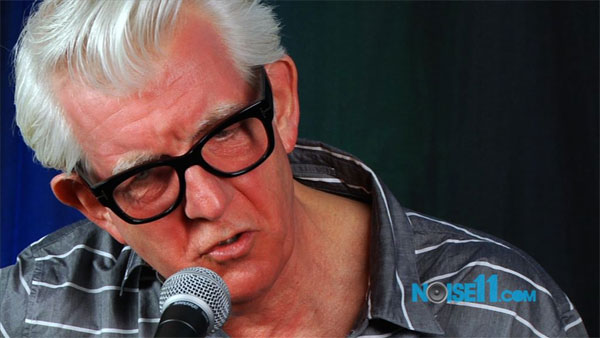

Influential American blues artist JOHN HAMMOND, whose six-decade career preserved and reinterpreted traditional blues for modern audiences, has died at the age of 83.
by Paul Cashmere
John Hammond, the American blues singer and guitarist who dedicated his life to the preservation and performance of traditional blues music, has died aged 83. His death on February 28, 2026 was confirmed by longtime collaborator and friend Paul James, who said he received the news from Hammond’s wife Marla. Further details surrounding the cause and location of his death have not yet been disclosed.
Across more than sixty years of recording and touring, Hammond built a reputation as one of the most authentic interpreters of acoustic blues outside its original Southern roots. Performing variously as John Hammond, John P. Hammond and John Hammond Jr., he remained committed to the raw, stripped-back traditions of Delta and Chicago blues while influencing generations of musicians who followed.
Born John Paul Hammond in New York City on November 13, 1942, he was the son of legendary Columbia Records producer and talent scout John Henry Hammond Jr., a towering industry figure credited with championing artists including Billie Holiday, Aretha Franklin, Bob Dylan and Bruce Springsteen. Despite that formidable musical lineage, Hammond largely forged his own artistic identity, growing up primarily with his mother following his parents’ separation.
Inspired as a teenager after hearing Jimmy Reed recordings, Hammond took up guitar in high school and quickly immersed himself in the blues canon. He briefly attended Antioch College in Ohio before leaving to pursue music full-time, relocating to New York’s Greenwich Village during the early 1960s folk and blues revival.
In 1963 he signed with Vanguard Records and released his self-titled debut album, a collection deeply rooted in traditional material associated with artists such as Muddy Waters, Lightnin’ Hopkins and Robert Johnson. The record established Hammond as a serious blues interpreter at a time when younger audiences were rediscovering American roots music.
Although best known for his acoustic performances, often played on a National Reso-Phonic guitar, Hammond moved fluidly between acoustic and electric settings. His 1965 album So Many Roads featured guitarist Mike Bloomfield alongside musicians Robbie Robertson, Garth Hudson and Levon Helm, players who would soon form The Band. Hammond’s early association with these musicians helped place him within a creative network that shaped rock and blues during the decade’s cultural expansion.
During the same era, Hammond crossed paths with emerging talents including Jimi Hendrix, Eric Clapton and Duane Allman. Hendrix briefly played in Hammond’s touring band before achieving international fame, and Hammond later reflected on the remarkable moment when both Hendrix and Clapton shared his lineup for a short run of performances in Greenwich Village, an alignment that never made it to tape but became part of blues lore.
Hammond’s recording output remained prolific. Over his career he released more than 30 albums across labels including Vanguard, Columbia, Rounder and Chesky Records. His work consistently returned to traditional blues structures, delivered through a barrelhouse vocal style and precise guitar technique that prioritised feel over ornamentation.
Among his most distinctive later projects was Wicked Grin in 2001, an album devoted largely to the songs of Tom Waits, who also produced the record and contributed guitar and backing vocals. The collaboration introduced Hammond to new audiences while reinforcing his ability to reinterpret contemporary songwriting through a blues framework.
Recognition followed steadily throughout his career. Hammond won a Grammy Award in 1985 for his contribution to the compilation Blues Explosion and earned multiple additional nominations. He also received eight Blues Music Awards and, in 2011, was inducted into the Blues Hall of Fame, acknowledging both his musicianship and his long-standing advocacy for blues heritage.
Beyond recording, Hammond contributed to blues scholarship and storytelling. He hosted the 1991 television documentary The Search For Robert Johnson, examining the life and legacy of the influential Delta blues pioneer. The project reflected Hammond’s lifelong mission to connect modern listeners with the genre’s origins.
Commercial success was never the central measure of Hammond’s career. Instead, he cultivated a devoted global audience and the deep respect of fellow musicians who valued his commitment to authenticity. Artists across blues and rock circles collaborated with him or contributed to his recordings, recognising his role as both interpreter and custodian of a musical tradition.
Hammond continued performing well into later life, maintaining an active presence on stage and in recording studios. His longevity reflected not only technical skill but an enduring passion for the blues as a living art form.
He is survived by his wife Marla and extended family.
Stay updated with your free Noise11.com daily music news email alert. Subscribe to Noise11 Music News here
Be the first to see NOISE11.com’s newest interviews and special features on YouTube. See things first—Subscribe to Noise11 on YouTube
Follow Noise11.com on social media:
Bluesky
Facebook – Comment on the news of the day