
In an excellent conversation with Rick Beato, Mick Jagger reflects on why popular music lyrics often aim low, what Bernie Taupin values in his work, and the practical, often messy process of turning a riff or a mood into a Rolling Stones song.
Mick Jagger does not romanticise the craft of writing popular songs. Sitting with Rick Beato, he delivers a blunt assessment of the field he has worked in for six decades: the bar in popular music is not particularly high, and the competition is frequently “dumber and dumber.”
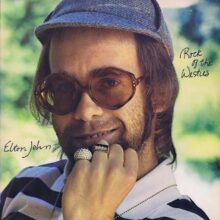
The observation pops out while Beato is probing Jagger’s lyrical approach. Beato has recently spoken with Bernie Taupin, who ranked Leonard Cohen and Tom Waits high on his list of admired lyricists before placing Jagger in a category of his own. “I don’t think anybody writes lyrics like him,” Taupin told Beato. “He’s really in a complete compartment of his own.” Jagger accepts the compliment without ceremony. He does not claim superiority. Instead he points to the broader landscape. “In popular music the bar is not really that high. Is it? Let’s face it.” In the 1960s, he notes, calling something “dumb” could function as praise because it meant everyone would understand it and relate to it.
That pragmatic view of accessibility sits at the centre of how Jagger describes his own process. He is not precious about methods. Songs arrive in multiple ways: a vocal line hummed at midnight and captured on a phone, a drum pattern tapped out, a guitar riff that demands a top line, or a mood that must be protected from being rushed. The key is marrying the strong element with something that can carry it. “Sometimes you get instantly great things and sometimes you don’t get anything,” he says. “You’ve got a great line and a terrible riff. And then suddenly you’ve got a great riff… when you get the two things marrying up together… then you’re off to a good start.”
Concrete examples from the conversation illustrate the range. “Sympathy for the Devil” existed as chords and words before the band found its shape. Jagger had the song; it was not yet a samba. The rhythmic idea emerged from the Stones’ time in Brazil and Keith Richards’ bass playing. The piano part, played by Nicky Hopkins, became prominent at the front, with guitars entering later to build dynamics. Jagger still remembers the development because it was filmed. Other tracks began with more complete demos that were never fully shared. On one recent studio piece (the heavy, low-tuned track Beato plays during the interview), Jagger arrived with words, a tempo and a mood already in place. He simply started playing an E chord. The band treated it as jamming until Ronnie Wood supplied a B section that Jagger preferred to his own. The finished song kept the original weight and blues feel while sounding unlike early Rolling Stones blues recordings.
Collaboration with Richards remains central and competitive in a productive sense. Jagger often hopes Richards will improve a guitar feature. On “Brown Sugar,” Richards essentially played what Jagger had written. On other tracks, including more recent work, Richards arrives with a stronger lick that transforms the groove. Technology now allows a single strong take of a riff to be moved between performances, but Jagger notes that the principle of capturing and refining ideas is older than digital recording. Early on, limited tracks forced more live performance; vocals and percussion were frequently cut together. Later, the luxury of multiple passes and remote mixing (used on Blue & Lonesome and Hackney Diamonds) changed the logistics without removing the need for decisive listening.
Open tunings, especially the open G that Richards adopted after watching Ry Cooder, shifted the band’s harmonic language and made certain rock songs feel modal. Jagger wrote “Moonlight Mile” in that tuning. The same practical curiosity extends to harmonica. Influenced first by Sonny Terry and then by the more electric approach of Little Walter, Jagger treats the instrument as an extension of the voice rather than a pure solo voice. He learned the cross-harp principle early and values the bending and phrasing that link harmonica lines to sung ones.
Throughout the conversation Jagger returns to efficiency and instinct. Long studio jams can produce strong results but are time-consuming. Pre-written material that still allows room for the band to interpret it is preferred. Demos on cassette were once mainly personal memory aids rather than polished presentations. Today phones capture the 1 a.m. idea, yet the test remains the same: does the song still hold when other musicians respond to it?
Beato’s interview does not present Jagger as a theorist. It shows a working songwriter who has spent a lifetime solving the same practical problems under changing conditions of technology, band personnel and public taste. The low bar he identifies in popular music is not a complaint so much as a description of the environment in which hooks must still land and moods must still survive the translation from private idea to finished record. Taupin’s assessment that no one writes lyrics quite like Jagger sits comfortably alongside Jagger’s own refusal to overstate the mystery. The work is craft, instinct, collaboration and the occasional refusal to accept a merely adequate solution when a better one is available.
Stay updated with your free Noise11.com daily music news email alert. Subscribe to Noise11 Music News here
Be the first to see NOISE11.com’s newest interviews and special features on YouTube. See things first—Subscribe to Noise11 on YouTube
Follow Noise11.com on social media:
Bluesky
Facebook – Comment on the news of the day