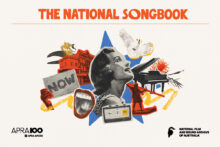

Beds Are Burning, Treaty, I Am Woman and My Island Home are among the inaugural selections for a new national archive recognising the songs that have helped shape Australia’s cultural identity.
Ten songs spanning more than a century of Australian music have been selected for the inaugural National Songbook, with Midnight Oil’s Beds Are Burning, Yothu Yindi’s Treaty and Waltzing Matilda among the first works recognised.
APRA AMCOS and the National Film and Sound Archive of Australia (NFSA) announced the first inductees at a launch event in Canberra on 4 November 2026, establishing a new annual archive dedicated to preserving songs and compositions of lasting cultural significance.
The inaugural selection brings together some of Australia’s most recognisable songwriting, from the bush ballad tradition of Waltzing Matilda to the political urgency of Beds Are Burning and Treaty, the feminist statement of Helen Reddy’s I Am Woman and the electronic energy of The Presets’ My People.
The ten selections reflect different periods, musical styles and experiences of Australian life. They include rock, pop, contemporary electronic music, classical composition, film scoring and songs connected to First Nations identity and history.
The National Songbook is intended to become a permanent digital collection, preserving not only the recordings but also the stories, creative backgrounds and cultural significance behind the works.
To qualify, songs had to be written or co-written by Australian APRA members, released at least 10 years ago and demonstrate significant cultural impact in Australia. The inaugural selections were made by a ten-member panel drawn from songwriting, composition, broadcasting, journalism and history. The panel was chaired by APRA Chair Jenny Morris and NFSA Chair Annette Shun Wah.
The ten inaugural National Songbook inductees are:
Beds Are Burning – Midnight Oil (1987)
Written by Peter Garrett, Rob Hirst and Jim Moginie, Beds Are Burning became one of Australia’s most internationally recognised protest songs. Inspired by the band’s experiences travelling through Central Australia and meeting First Nations communities, the song made the question of Aboriginal land rights central to its message. Released in 1987, it became Midnight Oil’s biggest international hit and a defining Australian musical statement in the lead-up to the 1988 bicentenary.
Down City Streets – Ruby Hunter (1990)
Ruby Hunter’s Down City Streets addresses displacement, survival and the experiences of the Stolen Generations. Hunter’s connection to the subject was deeply personal. The song was first recorded by Archie Roach on Charcoal Lane before Hunter released her own interpretation. Its inclusion recognises an important contribution to Australian songwriting and the continuing cultural significance of First Nations stories.
Earth Cry – Peter Sculthorpe (1990)
Peter Sculthorpe’s Earth Cry represents the classical composition tradition within the National Songbook. Commissioned by the ABC, the work brings together European orchestral influences and First Nations musical elements, including didgeridoo. Sculthorpe sought to create a musical expression of the Australian landscape, moving beyond traditional European approaches to composition.
Friday On My Mind – The Easybeats (1966)
Harry Vanda and George Young wrote Friday On My Mind, giving The Easybeats one of the most enduring Australian rock songs of the 1960s. Released in 1966, the song captured the anticipation of the working week ending and the freedom of the weekend. Its international success established the group as one of Australia’s first major rock exports and helped demonstrate that Australian songwriting could compete on the world stage.
I Am Woman – Helen Reddy (1971)
Written by Helen Reddy and Ray Burton, I Am Woman became one of the defining musical statements of the women’s liberation movement. Reddy wanted a song that reflected the changing position of women in society. Released in 1971, it subsequently reached a global audience and became closely associated with the campaign for women’s equality. Its place in the National Songbook recognises the influence of popular music on social change.
My Island Home – Warumpi Band (1987)
Neil Murray wrote My Island Home while travelling away from the island home of Warumpi Band member George Burarrwanga. First released by the band in 1987, the song later reached a much wider audience through Christine Anu’s 1995 recording. Anu’s interpretation became one of the most familiar Australian songs of the following decade, particularly after her performance at the 2000 Sydney Olympics. The song has become an enduring expression of belonging, connection to Country and identity.
My People – The Presets (2007)
Julian Hamilton and Kim Moyes created My People for The Presets’ 2007 album Apocalypso. Driven by industrial electronic rhythms and a powerful sense of collective identity, the track was influenced in part by conversations the duo had overseas about Australia’s treatment of asylum seekers. Its subsequent use across radio, advertising and sporting events helped make it one of the most recognisable Australian electronic recordings of its era.
The Boys – The Necks (1998)
The film score for The Boys was composed by Chris Abrahams, Tony Buck and Lloyd Swanton of The Necks. The group’s restrained, atmospheric approach provided an unsettling musical backdrop to the 1998 Australian film, which examined the darker psychological undercurrents of suburban life. The trio’s involvement began early in the production process, allowing the music to develop alongside the film rather than simply following conventional dramatic cues.
Treaty – Yothu Yindi (1991)
Treaty remains one of the most significant Australian protest songs ever recorded. Written by Dr M. Yunupingu, Stuart Kellaway, Witiyana Marika, M. Mununggurr, Cal Williams, G. Yunupingu, Peter Garrett and Paul Kelly, the song addressed the failure to deliver on the promise of a treaty following the 1988 bicentenary.
Yothu Yindi combined Yolŋu musical traditions with contemporary rock, creating a recording that carried its political message well beyond Australia. The subsequent Filthy Lucre remix introduced Treaty to international dancefloors, giving the song another life while retaining its central message about Indigenous rights and recognition.
Waltzing Matilda – Banjo Paterson and Christina Macpherson
No collection of culturally significant Australian songs would be complete without Waltzing Matilda. With lyrics by Andrew ‘Banjo’ Paterson and a melody attributed to Christina Macpherson, the song has become one of Australia’s most enduring pieces of popular folklore. Its story of a travelling swagman has passed through generations, with the song’s history also reflecting the adaptations and interpretations that have shaped its place in Australian culture. Its first commercial recording dates to 1927.
APRA AMCOS CEO Dean Ormston said the ten selections could not represent the entirety of Australian musical history but offered an important starting point.
“No 10 songs could ever tell the whole story of Australia, but together these inaugural inductees help us understand, as a nation, where we’ve come from, who we are and the values we’ve carried through generations,” Ormston said.
He also connected the launch to APRA’s centenary, marking 100 years of representing songwriters, composers and music publishers.
NFSA Chief Curator Meagan Loader said the collection would preserve the cultural stories behind the music as well as the works themselves.
“The National Songbook reflects the remarkable breadth of Australian songwriting and composition, from songs of protest, belonging and identity to works that have become woven into our national story and our DNA,” Loader said.
The Canberra launch included live interpretations of several selections. Deline Briscoe performed I Am Woman, Barney McCall presented material from The Boys, and Emma Donovan performed Down City Streets.
The National Songbook will develop as an ongoing annual collection within the NFSA’s permanent digital archive, creating a resource for future generations to explore the music and the people behind it.
The inaugural ten selections also make a statement about the breadth of Australian songwriting. From the international reach of The Easybeats and Midnight Oil to the First Nations perspectives of Ruby Hunter, Warumpi Band and Yothu Yindi, the collection recognises music as an important record of Australia’s changing cultural identity.
The National Songbook collection is available through the National Film and Sound Archive at nfsa.gov.au, with playlists also available on Apple Music, Spotify and YouTube Music.
Stay updated with your free Noise11.com daily music news email alert. Subscribe to Noise11 Music News here
Be the first to see NOISE11.com’s newest interviews and special features on YouTube. See things first—Subscribe to Noise11 on YouTube
Follow Noise11.com on social media:
Bluesky
Facebook – Comment on the news of the day