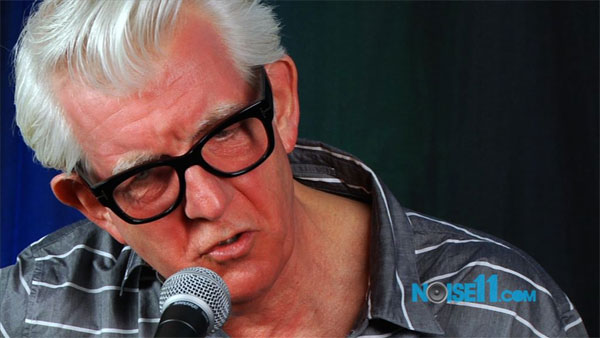

Neil Young has never hidden from uncomfortable truths, especially when they intersect with his music. Few examples illustrate that candour more starkly than Borrowed Tune, a fragile piano lament that openly acknowledges its melodic debt to The Rolling Stones’ 1966 recording Lady Jane. Rather than obscuring the connection, Young placed it front and centre, turning a moment of creative exhaustion into one of the most disarming confessions in his catalogue.
Borrowed Tune emerged during one of the bleakest periods of Young’s career. Written in late 1973 in a hotel room in Wisconsin, the song took shape amid the emotionally draining Time Fades Away tour. This era would later be grouped into what fans and historians call the “Ditch Trilogy”, alongside Time Fades Away, Tonight’s The Night and On The Beach. These records followed Young’s commercial peak with Harvest and documented his deliberate retreat from mainstream expectations, both musically and emotionally.
The grief Young was carrying was immense. Crazy Horse guitarist Danny Whitten and roadie Bruce Berry had both died from drug related causes, and their losses haunted Young throughout this period. In that Wisconsin hotel room, he sat at a piano and began playing Lady Jane. Partway through, he forgot the chord sequence. Instead of stopping, he substituted his own chords, gradually reshaping the melody into something new. Young later estimated that around 30 percent of the original Stones composition remained, enough that the source was unmistakable.
Rather than conceal the lineage, Young wrote lyrics that confronted it directly. “I’m singin’ this borrowed tune, I took from the Rolling Stones,” he admitted, framing the song as a byproduct of fatigue and creative paralysis. The lyric captured the sense of isolation he felt on the tour, alone in a room, questioning whether stadium shows and industry momentum were compatible with where he was emotionally at that point in his life.
Recorded solo with piano, harmonica and voice, Borrowed Tune was cut on 5 December 1973 at Young’s Broken Arrow Ranch studio. It was later included on Tonight’s The Night, released in 1975 after being shelved for nearly two years. Young has since explained that Borrowed Tune and Lookout Joe were not part of the original nine song configuration of the album. They were added later to soften what was initially an even harsher, more unsettling listening experience, complete with between song studio chatter that made the sessions feel closer to a wake than a conventional recording.
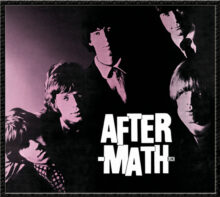
The source material, Lady Jane, occupies a very different emotional and historical space. Written by Mick Jagger in early 1966 and credited to the Jagger, Richards partnership, the song appeared on Aftermath, a landmark Rolling Stones album. Aftermath was the first Stones LP composed entirely of original material, marking the moment when Jagger and Richards fully asserted themselves as the band’s primary songwriters.
Inspired in part by the controversial novel Lady Chatterley’s Lover, where “Lady Jane” is used as a euphemism, the song cloaked its innuendo in historical imagery. Jagger later noted that the names used in the lyrics were drawn from history and chosen largely unconsciously, lending the song an Elizabethan, courtly atmosphere. Possible inspirations have long included figures such as Jane Ormsby-Gore and even echoes of Jane Seymour, Henry VIII’s third wife.
Musically, Lady Jane stands as one of the clearest examples of Brian Jones’ role as a sonic innovator within the Stones. Jones played mountain dulcimer, weaving a baroque folk texture that set the song apart from the band’s blues rock origins. Jack Nitzsche contributed harpsichord, further reinforcing its Renaissance tone. The track was recorded at RCA Studios in Los Angeles in March 1966 and later released in the US and Germany as the B-side to Mother’s Little Helper, reaching number 24 on the Billboard Hot 100.
The connection between Lady Jane and Borrowed Tune runs deeper than melody alone. Jack Nitzsche, whose harpsichord defines the Stones recording, was also a long time collaborator with Neil Young, working with him across multiple projects. That shared musical lineage adds another layer to the crossover, linking two artists from different worlds through a common creative thread.
Notably, despite Young’s explicit admission, The Rolling Stones never pursued legal action nor publicly objected to Borrowed Tune. The song stands today as a rare example of an artist openly crediting inspiration within the lyric itself, transforming potential controversy into a moment of vulnerability.
In the end, Borrowed Tune documents a moment when Neil Young had little left to give, creatively or emotionally, and chose truth over polish. By tracing its roots back to Lady Jane, the song bridges two distinct eras of rock history, revealing how influence, grief and exhaustion can intersect to produce something quietly enduring.
Stay updated with your free Noise11.com daily music news email alert. Subscribe to Noise11 Music News here
Be the first to see NOISE11.com’s newest interviews and special features on YouTube. See things first—Subscribe to Noise11 on YouTube
Follow Noise11.com on social media:
Bluesky
Facebook – Comment on the news of the day