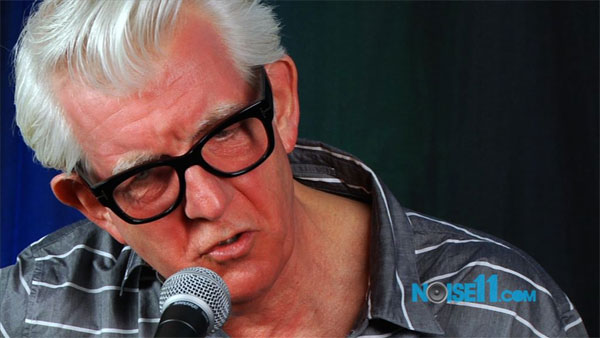

The Jamaican rhythm architect shaped the sound of roots reggae, dancehall and international pop across five decades, leaving a recorded legacy that stretches from Kingston studios to the world’s biggest stages.
by Paul Cashmere
Lowell “Sly” Dunbar, the Jamaican drummer whose innovations as one half of the legendary rhythm partnership Sly & Robbie helped define reggae music and permanently altered global popular music, has died aged 73. Dunbar passed away on January 26 after a period of illness, with no cause of death disclosed. His passing marks the loss of one of the most influential percussionists of the twentieth century, a musician whose ideas travelled far beyond the genre that first shaped him.
Born in Kingston on May 10, 1952, Dunbar began drumming professionally as a teenager, quickly establishing himself as a player of unusual precision, imagination and authority. His first major breakthrough came in 1971 when, at just sixteen, he played on Dave and Ansil Collins’ “Double Barrel”, a track that unexpectedly reached number one in the UK. Recorded on a rudimentary two-track machine with a borrowed drum kit, the session hinted at a career built on instinct, adaptability and an unshakeable sense of groove.
During the 1970s, Dunbar became a central figure in Jamaica’s studio system, working with Bunny Lee’s Aggrovators and the Channel One house band The Revolutionaries. These sessions coincided with reggae’s creative apex, producing recordings that defined the roots era and established rhythmic templates still in use today. Alongside bassist Robbie Shakespeare, whom he met in 1972, Dunbar helped refine the “rockers” rhythm, adding syncopation and forward momentum to the traditional one drop feel.
As Sly & Robbie, the duo became the most in-demand rhythm section in reggae history. Their work with Peter Tosh produced a run of essential albums including Legalize It, Equal Rights, Bush Doctor and Mystic Man, records that fused militant lyrical content with muscular, modern rhythms. They also became central to the sound of Black Uhuru, co-producing the Showcase album and performing on Anthem, which won the inaugural Grammy Award for Best Reggae Recording in 1985.
Dunbar’s influence extended far beyond Jamaica. At Chris Blackwell’s Compass Point Studios in the Bahamas, he helped shape Grace Jones’ groundbreaking early 1980s trilogy Warm Leatherette, Nightclubbing and Living My Life. The atmospheric pulse of “Walking In The Rain” and the spacious dub textures of Nightclubbing demonstrated how reggae rhythms could underpin sophisticated, genre-defying pop. Dunbar returned to that world decades later for Jones’ 2008 album Hurricane.
One of the most remarkable chapters of Dunbar’s career came through his collaborations with Bob Dylan. Invited to play on Infidels in 1983, Dunbar and Shakespeare contributed to tracks including “I And I”, bringing a subtle Caribbean sensibility to Dylan’s reflective songwriting. The partnership continued on Empire Burlesque, further cementing Dunbar’s standing as a musician trusted across stylistic boundaries.
That versatility also saw Dunbar working with Mick Jagger on She’s The Boss, Serge Gainsbourg on Aux Armes Et Cætera, and a wide array of artists spanning jazz, rock, soul and pop. Yet even as his international profile grew, Dunbar remained deeply connected to Jamaican music. Through Taxi Records, the production company he co-founded with Shakespeare, he played a formative role in the evolution of dancehall, producing hits such as Chaka Demus & Pliers’ “Murder She Wrote” and helping introduce reggae rhythms to new generations and audiences.
Dunbar embraced technology at a time when many drummers resisted it, integrating drum machines and programming into his work without sacrificing feel or musicality. That adaptability ensured his relevance across decades of change, reflected in an estimated recording output numbering in the tens of thousands and thirteen Grammy nominations, with wins in 1985 and 1999 for Anthem and Friends.
In Jamaica, Dunbar’s achievements were formally recognised with the Order of Distinction and the Musgrave Gold Medal. Internationally, his influence was felt in every corner of modern rhythm-based music. With the earlier passing of Robbie Shakespeare in 2021, Dunbar’s death closes the chapter on one of music’s most important creative partnerships.
Sly Dunbar’s drumming reshaped reggae, expanded its vocabulary and carried its heartbeat into the wider world. His rhythms endure, embedded in recordings that continue to move bodies and minds across generations.
Stay updated with your free Noise11.com daily music news email alert. Subscribe to Noise11 Music News here
Be the first to see NOISE11.com’s newest interviews and special features on YouTube. See things first—Subscribe to Noise11 on YouTube
Follow Noise11.com on social media:
Bluesky
Facebook – Comment on the news of the day