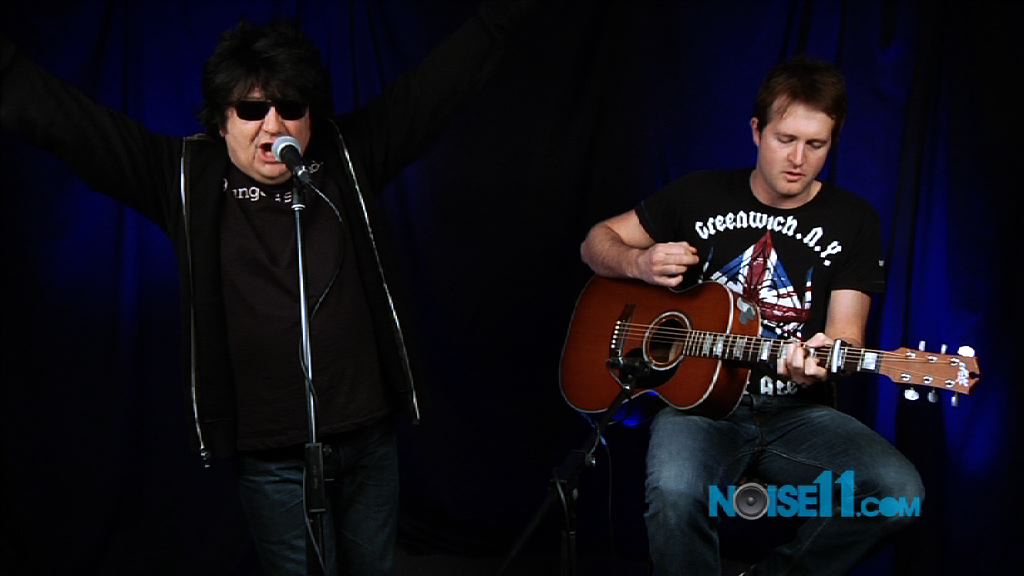

Social Distortion’s fifth studio album marked a deliberate return to the band’s punk foundations while Mike Ness confronted grief, regret, recovery and personal responsibility.
by Paul Cashmere
Thirty years after its release on September 17, 1996, Social Distortion’s White Light, White Heat, White Trash remains a defining record in the Southern California punk band’s catalogue, capturing Mike Ness and the group deliberately moving away from the country, blues and rock influences of their recent work and back towards the urgency of their earliest recordings.
Produced by Michael Beinhorn and issued by 550 Music and Epic Records, the album reached No. 27 on the Billboard 200 and sold 30,000 copies in its first week in the United States. By December 31, 1998, Nielsen SoundScan had recorded 277,000 US sales, making it Social Distortion’s third best-selling album at that point.
The album was also a product of a turbulent period for the band. Following extensive touring behind 1992’s Somewhere Between Heaven and Hell, Social Distortion continued on the road until the end of 1993 before taking a break. Legal battles concerning the band’s early recordings then occupied part of the group’s time as they worked to regain access to material that was unavailable to the public.
When songwriting resumed, Ness wanted the next Social Distortion album to be definitive. The band initially wrote 25 songs, with Ness determined not to settle for material he felt did not represent the group at its best. Twelve songs were written in 1994, but Beinhorn rejected most of them, pushing the band to go further. Only two of those original songs survived the process.
Ness initially found the producer’s assessment difficult, but the relationship developed into mutual respect. Beinhorn’s approach also shaped the sound of the record. Recording began in 1995, with sessions taking place at Bearsville Studio in Woodstock, New York, from August 1995 through June 1996. The production philosophy was described as a return to basics, with analogue and vintage equipment used throughout the sessions.
The result was a harder and more direct Social Distortion. The country, blues and rockabilly elements that had become increasingly prominent on earlier albums were reduced in favour of a sound closer to the band’s late 1970s and early 1980s punk influences. Ness cited The Clash, New York Dolls, Generation X, Dead Boys and Johnny Thunders among the artists who inspired his thinking.
That regression was intentional. Ness viewed the album as a return to the emotional intensity of Social Distortion’s 1983 debut, Mommy’s Little Monster, while arguing that the process represented an evolution because it required him to confront material from his own life.
The lyrical focus was markedly personal. Ness had been in recovery from drugs and alcohol for a decade when he began writing the songs, and he was reassessing the causes and consequences of his earlier life. I Was Wrong became an admission of personal mistakes, while When the Angels Sing addressed the death of his grandmother in December 1993 and the grief that followed.
Other songs dealt with racism, sobriety, anger, self-care and the consequences of personal decisions. Don’t Drag Me Down was informed by Ness witnessing racism while touring and at punk shows. Untitled reflected on sobriety and the deaths of friends who had helped him. Down on the World Again examined the anger rooted in a difficult childhood, while Crown of Thorns considered the cycle of repeating destructive choices.
The album’s two singles demonstrated its position within the changing American rock landscape of the mid 1990s. I Was Wrong received substantial rock radio and MTV exposure, reaching No. 4 on the Modern Rock Tracks chart and No. 12 on Mainstream Rock Tracks. When the Angels Sing was also released as a single, although it achieved less chart and radio impact.
The album’s reception was divided. Some critics praised its intensity, melodies and personal writing, while others questioned the polished production and the balance between punk authenticity and mainstream rock accessibility. That tension was particularly relevant in the mid 1990s, when punk had moved much closer to the commercial centre of American rock.
For Social Distortion, that exposure brought a familiar debate. Some fans objected to I Was Wrong receiving mainstream rock radio play, concerned that punk’s outsider identity was being compromised. The band nevertheless continued touring internationally, including an appearance on the 1997 Warped Tour alongside a generation of punk and alternative acts.
The album also contains a hidden track, Social Distortion’s version of The Rolling Stones’ Under My Thumb. Ness explained that the band had previously recorded the song and wanted to revisit it with the experience they had gained as musicians, effectively reinterpreting an influence rather than simply reproducing it.
Three decades on, White Light, White Heat, White Trash occupies an important position between Social Distortion’s foundational punk recordings and the broader rock audience the band reached during the 1990s. Its commercial performance was significant without turning the group into a conventional mainstream act, while its subject matter gave the record a depth that extended beyond its aggressive musical surface.
For Ness, the album was an attempt to reconnect with the emotional honesty he associated with punk’s first wave. In doing so, Social Distortion created a record that looked backwards musically while confronting the consequences of the past in its lyrics.
Tracklisting
Dear Lover
Don’t Drag Me Down
Untitled
I Was Wrong
Through These Eyes
Down On The World Again
When The Angels Sing
Gotta Know The Rules
Crown Of Thorns
Pleasure Seeker
Down Here (With The Rest Of Us)
Under My Thumb
Stay updated with your free Noise11.com daily music news email alert. Subscribe to Noise11 Music News here
Be the first to see NOISE11.com’s newest interviews and special features on YouTube. See things first-Subscribe to Noise11 on YouTube
Follow Noise11.com on social media:
Facebook – Comment on the news of the day