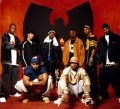

Wu-Tang Clan have confirmed the death of founding architect and executive producer Oliver “Power” Grant, a pivotal figure in the group’s rise and a driving force behind their global cultural footprint.
by Paul Cashmere
Wu-Tang Clan have confirmed that Oliver “Power” Grant, the businessman and executive producer who helped build the group’s empire from the ground up, has died after a battle with pancreatic cancer. He was 55.
In a joint statement issued by the Grant and Wu-Tang families, it was revealed that Grant passed away on Tuesday, 24 February 2026, following what was described as a “courageous and hard-fought battle with pancreatic cancer”. He was surrounded by his mother, children, extended family and closest friends.
Born on 24 November 1970 and raised in the Park Hill neighbourhood of Staten Island, Grant was known as “Pookie” to those closest to him. Though not a performing member of the group, his influence within Wu-Tang Clan was foundational. A childhood friend of the family of Wu-Tang co-founder RZA, Grant became an early financial backer at a time when the collective’s ambitions outpaced their resources.
Emerging from Staten Island in the early 1990s, Wu-Tang Clan redefined hip-hop with their 1993 debut album Enter The Wu-Tang 36 Chambers. The record’s stark production, dense lyricism and martial arts iconography reshaped the sound and business model of rap music. Behind the scenes, Grant was instrumental in helping secure funding and studio time during the group’s formative phase. He would go on to serve as executive producer across the Clan’s catalogue, ensuring operational cohesion as the members pursued solo careers while maintaining a unified brand.
The Wu-Tang statement described Grant as “a visionary force, a pillar of the Wu-Tang family, and a global architect of culture”. It continued, “It was the honour of his life to pour his love, wisdom and brilliance into his family and his community. His impact was singular, there will never be another to take his place.”
Grant’s commercial instincts extended beyond music. In the mid-1990s he founded Wu Wear, one of the first artist-owned streetwear brands at a time when hip-hop fashion was becoming a parallel industry to the music itself. Wu Wear grew into a multimillion-dollar enterprise and became a template for future artist-driven lifestyle brands, decades before such ventures became commonplace.
While Wu-Tang Clan’s members, including Method Man, GZA, Raekwon, Ghostface Killah, Inspectah Deck, U-God and Masta Killa, built reputations as formidable lyricists, it was Grant who helped transform their collective vision into a sustainable enterprise. His oversight helped preserve the Clan’s identity during an era when internal dynamics and solo success could easily have fragmented the brand.
Tributes from members of the group have underscored the depth of the loss. Method Man wrote that he was struggling to process the news, while GZA reflected that Wu-Tang Clan would not have come to fruition without Grant’s commitment and belief in the project. The sentiment across statements has been consistent, Grant was more than an executive, he was family.
Wu-Tang Clan’s influence stretches well beyond record sales. Their business structure in the 1990s, which allowed individual members to sign solo deals with different labels while remaining loyal to the collective, altered the economics of hip-hop. Grant’s stewardship was central to navigating those arrangements. The group’s later projects, international touring and licensing ventures all bore his imprint.
At the time of Grant’s passing, Wu-Tang Clan were among the nominees for induction into the Rock And Roll Hall Of Fame, with inductees to be announced in April. The nomination recognises more than three decades of impact, from their Staten Island origins to their status as one of the most studied and sampled collectives in popular music. Grant’s role in that ascent was rarely front-facing, but consistently decisive.
The Grant and Wu-Tang families expressed gratitude for the global outpouring of support and asked for privacy as they navigate their grief. They concluded their statement with a reflection that encapsulated Grant’s ethos, “Greatness is not what you have, but what you give.”
A wake will be held on 13 March 2026, with the funeral scheduled for 14 March 2026 in the New York City area. Exact locations will be announced closer to the dates as arrangements are finalised.
Grant’s legacy endures in the architecture of Wu-Tang Clan’s empire, a blueprint for artist ownership and cultural self-determination that continues to influence new generations of musicians and entrepreneurs.
Stay updated with your free Noise11.com daily music news email alert. Subscribe to Noise11 Music News here
Be the first to see NOISE11.com’s newest interviews and special features on YouTube. See things first—Subscribe to Noise11 on YouTube
Follow Noise11.com on social media:
Bluesky
Facebook – Comment on the news of the day