
David Clayton-Thomas, the Canadian vocalist who led Blood, Sweat & Tears through its most commercially successful and culturally influential era, has died in Toronto at the age of 84. His publicist Eric Alper confirmed he passed away peacefully in hospital on Wednesday. No cause of death was provided. Clayton-Thomas helped define the jazz-rock fusion era of the late 1960s with hits including “Spinning Wheel” and “You’ve Made Me So Very Happy.”
by Paul Cashmere
David Clayton-Thomas, the Canadian singer and songwriter best known as the unmistakable voice of Blood, Sweat & Tears during its chart-dominating peak, has died at a Toronto hospital aged 84, marking the end of a career that reshaped the boundaries between rock, jazz, and soul music.
Clayton-Thomas passed away on Wednesday in Toronto, according to his publicist Eric Alper, who confirmed the news on Thursday. No cause of death has been disclosed. His death closes a chapter on one of the most commercially successful and stylistically influential frontmen of the late 1960s and early 1970s, a period when Blood, Sweat & Tears helped redefine mainstream popular music through its fusion of brass arrangements and rock instrumentation.
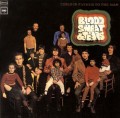
The significance of Clayton-Thomas’ legacy rests on both scale and impact. As the lead singer of Blood, Sweat & Tears, he fronted a run of recordings that delivered multiple No. 2 Billboard Hot 100 singles and a self-titled album that topped the US charts for seven weeks, ultimately selling more than 10 million copies worldwide. The record also won five Grammy Awards, including Album of the Year, a landmark achievement that placed the group ahead of contemporaries including The Beatles’ “Abbey Road” at the ceremony. For many listeners, Clayton-Thomas became the defining voice of jazz-rock at its commercial peak.
Born David Henry Thomsett in England and raised in Toronto, Clayton-Thomas’ early life was marked by instability and hardship. By his teenage years he had left home and spent time sleeping in abandoned buildings, cycling through jails and reformatories for offences including vagrancy and petty theft. Music became both escape and discipline.
He taught himself guitar while incarcerated, later gravitating to Toronto’s Yonge Street club circuit where rhythm and blues shaped his early performance identity.
Before joining Blood, Sweat & Tears, Clayton-Thomas performed with The Shays and The Bossmen, building a reputation within Toronto’s evolving blues and jazz-influenced rock scene. His breakthrough came in 1968 when he was invited to join Blood, Sweat & Tears in New York, replacing earlier vocalist Al Kooper. The decision proved decisive.
Within months, the group released its landmark self-titled second album, with Clayton-Thomas’ voice driving key tracks including “Spinning Wheel,” his own composition, alongside “You’ve Made Me So Very Happy” and “And When I Die.”
The band quickly escalated to international prominence, headlining major venues and performing at festivals including Woodstock in 1969. That same period saw global touring and an expansion of their orchestral rock approach, with horn arrangements becoming central to their identity. In 1970, Blood, Sweat & Tears became the first rock group to tour Eastern Europe under a US State Department initiative, a decision later examined for its political implications. A 2023 documentary, What the Hell Happened to Blood, Sweat & Tears, revisited claims that Clayton-Thomas was pressured into participation in exchange for US residency conditions, highlighting the complex intersection of music and Cold War diplomacy.
Clayton-Thomas left the group in 1972, citing exhaustion after years of constant touring. He went on to release multiple solo albums throughout the 1970s, while periodically returning to Blood, Sweat & Tears during later reformations. His later career included extensive touring under the band name and, from the 1980s onward, a parallel solo identity that continued into the 21st century. He was inducted into the Canadian Music Hall of Fame and received a star on Canada’s Walk of Fame in 2010.
While his musical achievements are widely celebrated, his career was also shaped by controversy and fatigue around the pressures of the industry. The band’s alignment with US government-sponsored touring during the Vietnam era drew criticism from anti-war activists, while internal personnel changes and relentless touring schedules contributed to repeated lineup instability and eventual commercial decline. Despite this, Blood, Sweat & Tears maintained a long touring life across decades, with Clayton-Thomas remaining the most recognisable voice associated with its classic era.
Clayton-Thomas is survived by his daughters, Ashleigh Clayton-Thomas and Christine Graham. A memorial concert celebrating his life and music will be held at a later date, with proceeds to benefit Peacebuilders Canada, a cause he supported during his lifetime. Further details are expected to be announced by his representatives.
His legacy sits firmly within the architecture of modern popular music history, particularly the late 1960s moment when rock expanded to incorporate jazz orchestration at scale. Few voices were as central to that transition as David Clayton-Thomas, whose recordings continue to define an era of ambitious, genre-blurring production and enduring commercial reach.
Stay updated with your free Noise11.com daily music news email alert. Subscribe to Noise11 Music News here
Be the first to see NOISE11.com’s newest interviews and special features on YouTube. See things first-Subscribe to Noise11 on YouTube
Follow Noise11.com on social media:
Facebook – Comment on the news of the day
Bluesky
Instagram
X (Twitter)