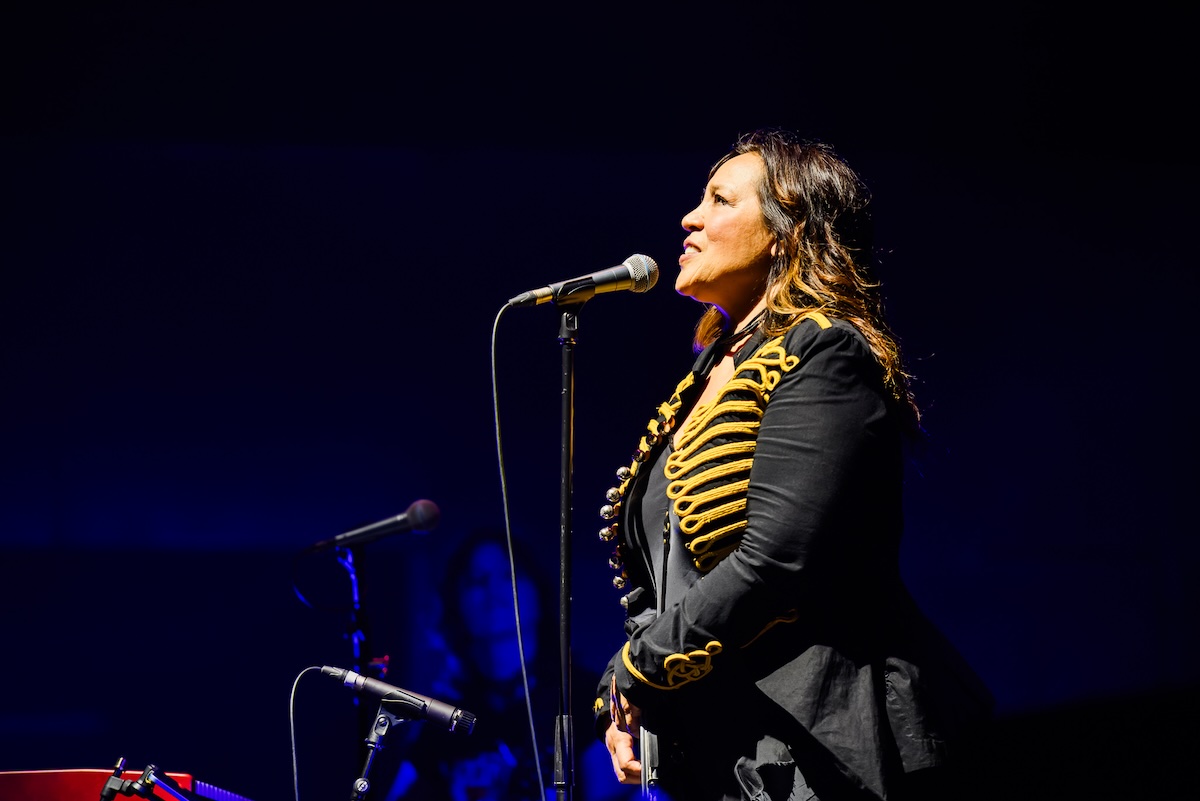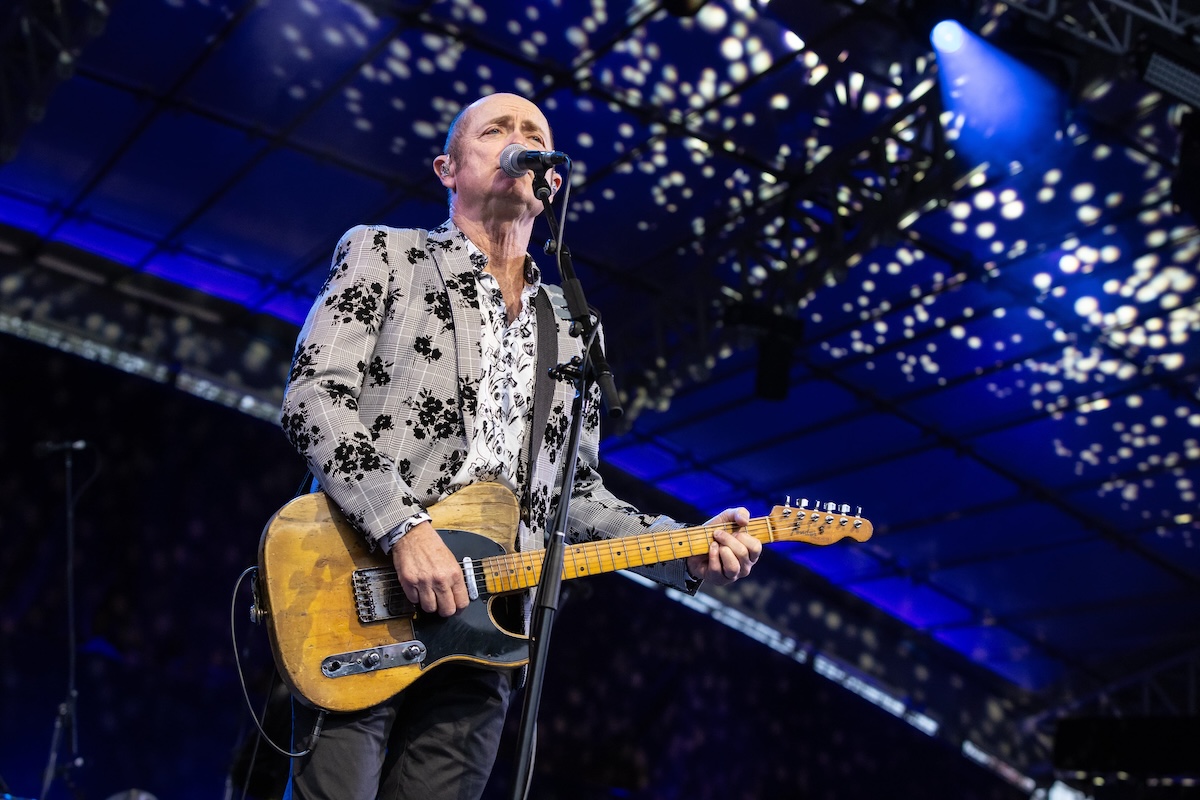

Mark Holden has received approval from Tom Waits to release his reworked version of Tom Traubert’s Blues, transforming the song’s existing Waltzing Matilda connection into a tribute to 10-year-old Matilda Bee Britvan and those killed in the December 2025 Bondi Beach terrorist attack.
by Paul Cashmere
Mark Holden has received official permission from Tom Waits to release his new version of Tom Traubert’s Blues, a recording that reshapes selected lyrics of the 1976 song around the December 2025 Bondi Beach terrorist attack and the death of 10-year-old Matilda Bee Britvan. Holden first discussed the recording with Noise11 before approaching Waits. He has now confirmed that permission has been granted, completing a process that began with Holden seeking the Britvan family’s approval.
Watch the Noise11 Mark Holden interview:
The recording carries an unusual piece of musical history with it. Tom Traubert’s Blues, from Waits’ 1976 album Small Change, incorporates the refrain and central phrase of Australia’s best-known bush ballad, A.B. “Banjo” Paterson’s Waltzing Matilda. Paterson wrote the poem in 1895, with Christina Macpherson composing the melody, and the song was first published in 1903.
More than 80 years later, Waits used the Australian song as the foundation for a very different narrative. Holden has now taken that same musical lineage back to Australia, adapting Waits’ interpretation to reflect a specific Sydney tragedy.
The new version changes selected lines rather than replacing the song wholesale. Holden’s revised lyric introduces Bondi Beach, Sydney and Matilda directly into Waits’ narrative, while retaining the recognisable structure and recurring Waltzing Matilda refrain.
Holden explained that the idea developed after the Bondi attack. He had been listening to Tom Traubert’s Blues and found that Waits’ words and music placed him emotionally at the scene.
“It evolved from there,” Holden said in a statement. “I adapted Tom Waits’ lyric to remember Matilda Bee Britvan and keep her spirit alive.”
Before recording the song, Holden approached the Britvan family. He said he wanted their permission before proceeding because the new lyric dealt directly with the death of their daughter.
“We approached the Britvan family for permission, and they trusted me with the story,” Holden said.
The December 14, 2025 attack at Bondi Beach killed 15 people during a Hanukkah celebration. Matilda, aged 10, was the youngest victim. Her family has continued to honour her memory through tributes incorporating bees, reflecting her middle name, Bee.
Holden recorded the new version several months after the attack with Andy Martin on piano and Helen Mountfort on cello. Nilusha Dassenaike arranged the vocal group featuring herself and members of the Pinto family.
Holden has performed the song at several gatherings during 2026, where he said it has had a strong emotional response. He also acknowledged the responsibility involved in altering a work by one of his favourite songwriters.
That issue has now been resolved with Waits’ approval.
“It is with enormous humility and gratitude that I thank the Britvan family and Tom Waits for trusting me with this song,” Holden said.
The approval also changes the status of the recording from the version Holden discussed with Noise11 earlier this year. At that time, he had obtained permission from the Britvan family but had not yet presented his adaptation to Waits. Holden said then that he was prepared to withdraw the recording if Waits objected.
The musical history behind the song makes the development particularly significant. Waits wrote Tom Traubert’s Blues in 1976 and released it as the opening track of Small Change. The song is credited to Waits, while its Waltzing Matilda refrain provides the direct connection to Paterson’s work. Waits has also discussed the meaning of “waltzing Matilda” as being associated with travelling and being on the road.
The song subsequently entered the repertoire of other performers. Rod Stewart recorded Tom Traubert’s Blues (Waltzing Matilda) in the early 1990s, giving the Waits composition another prominent interpretation.
Holden’s recording therefore represents another stage in a chain of reinterpretation that stretches across more than a century. Paterson’s 1895 bush ballad supplied the refrain that Waits incorporated into a song about displacement, isolation and life on the road. Holden has now adapted Waits’ version again, placing the same musical motif in the context of Bondi and Matilda’s death.
The result is a recording that connects three distinct Australian and American songwriting moments: Paterson’s late 19th century bush poetry, Waits’ 1970s interpretation of the Waltzing Matilda tradition, and Holden’s contemporary response to an Australian tragedy. Johnny Cash has also covered the original Banjo Paterson song.
Holden’s version is included in his album Now & Then & Shirley MacLaine, which brings together recordings from different periods of his career with newly recorded material. His relationship with Waits’ work extends beyond this song, with Holden also identifying Martha as a favourite and recalling seeing Waits perform in Hollywood during the 1980s.
For Holden, however, Tom Traubert’s Blues has taken on a new meaning. The recording began as a personal response to the Bondi attack, developed with the consent of Matilda’s family and has now received approval from the songwriter whose interpretation of Waltzing Matilda provided the starting point.
The song’s journey from Paterson’s 1895 bush ballad to Waits’ 1976 composition and now Holden’s 2026 recording has come full circle, with Waltzing Matilda once again being used to tell an Australian story.
Stay updated with your free Noise11.com daily music news email alert. Subscribe to Noise11 Music News here
Be the first to see NOISE11.com’s newest interviews and special features on YouTube. See things first-Subscribe to Noise11 on YouTube
Follow Noise11.com on social media:
Facebook – Comment on the news of the day