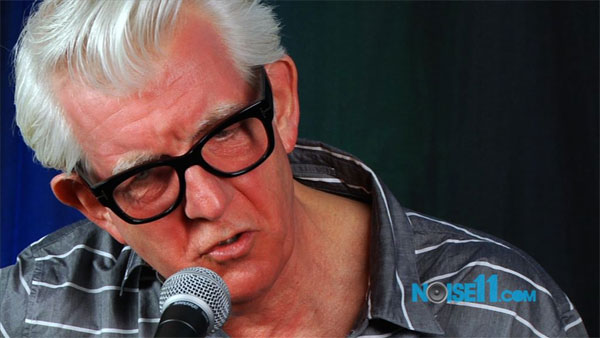

Steve Cropper, who shaped the sound of American soul from the heart of Memphis, died on 3 December 2025 at age 84, leaving behind one of the most consequential bodies of work in popular music.
Cropper’s influence ran through the studios of Stax Records, where he became a creative force behind the rise of southern soul and a central figure in the evolution of modern rhythm and blues.
His guitar shaped the identity of Otis Redding, Wilson Pickett, Sam & Dave, Carla Thomas, Rufus Thomas and many others, while his songwriting and production reshaped the possibilities of the genre. His work reached audiences across generations and helped define the musical foundation of an era.
Born in Dora, Missouri in 1941, Cropper spent his early childhood between Dora and West Plains before his family moved to Memphis when he was nine. The move placed him in the centre of a rich musical environment, where he absorbed the sound of local churches and neighbourhood groups. He bought his first guitar at fourteen and developed a style inspired by Tal Farlow, Chuck Berry, Jimmy Reed, Chet Atkins, Lowman Pauling and Billy Butler. This early mix of country, jazz, blues and gospel formed the basis of a sound that became unmistakable.
Cropper began playing with guitarist Charlie Freeman in a band called the Royal Spades, which evolved into the Mar-Keys. Their 1961 hit Last Night delivered an early taste of the new Memphis school of soul. His talent caught the attention of Stax president Jim Stewart, who recognised his ability to lead musicians through sessions with rare clarity and discipline. Cropper became a founding member of the Stax house band Booker T. & The M.G.’s with Booker T. Jones, Lewie Steinberg and Al Jackson Jr. This formation shaped some of the most important soul recordings of the 1960s.
His work as guitarist, songwriter and producer defined Stax through records such as (Sittin’ On) The Dock Of The Bay, co written with Otis Redding, and Soul Man, which included a direct vocal call out to Cropper. He played a 1956 Fender Esquire in many early sessions, later adopting a blonde Fender Telecaster that became central to his sound. His production on Redding’s catalogue reached global audiences, and interest from The Beatles showed how far his reputation had travelled. John Lennon and Paul McCartney even considered recording with him in Memphis, although their plans never materialised.
Cropper’s songwriting catalogue is a cornerstone of soul music. Knock On Wood, co written with Eddie Floyd, remains a perennial standard.
In The Midnight Hour, co written with Wilson Pickett, set a rhythm and blues benchmark that influenced generations of performers.
His work with Otis Redding delivered some of the most enduring songs in modern music history. In 1969, he released his first solo album With A Little Help From My Friends, which showcased his approach to melody and composition outside the studio ensemble environment.
Cropper left Stax in 1970 and helped establish TMI Studios. His production and session work broadened across artists such as Tower Of Power, Rod Stewart, John Prine, José Feliciano, Ringo Starr and John Lennon. He reunited with Booker T. & The M.G.’s, although plans for a return were halted when drummer Al Jackson Jr was murdered in Memphis in 1975. Cropper later joined Levon Helm’s RCO All Stars and became a key member of the Blues Brothers Band, appearing on film and soundtrack releases that reached global audiences. His role in The Blues Brothers and Blues Brothers 2000 brought his musicianship to a new generation.
Cropper continued recording, touring and collaborating through the 1980s, 1990s and 2000s. His work with Guy Sebastian on The Memphis Album generated renewed Australian interest in his catalogue.
He remained active well into his later years, receiving major recognition including induction into the Songwriters Hall of Fame in 2005 and the Nashville Songwriters Hall of Fame in 2010. His Grammy Award wins for (Sittin’ On) The Dock Of The Bay and Cruisin’ confirmed his standing as one of the genre’s most influential figures.
In his later years he released the tribute album Dedicated in 2011, Fire It Up in 2021 and Friendlytown in 2024 under the name Steve Cropper And The Midnight Hour, featuring Billy Gibbons and Brian May. Cropper remained visible on stage and in studio environments and was revered as one of the greatest guitarists of the twentieth century.
Steve Cropper’s contribution to rhythm and blues, soul and rock remains immeasurable. His guitar parts anchored some of the most recognisable songs of the twentieth century. His leadership at Stax shaped the direction of countless artists. His collaborations documented a lifetime of influence across many genres. His passing marks the end of an era, yet his music will continue to guide future generations of musicians.
Stay updated with your free Noise11.com daily music news email alert. Subscribe to Noise11 Music News here
Be the first to see NOISE11.com’s newest interviews and special features on YouTube. See things first—Subscribe to Noise11 on YouTube
Follow Noise11.com on social media:
Bluesky
Facebook – Comment on the news of the day