
The debate over streaming fraud and passive listening has intensified as chart milestones continue to be compared with records established during the vinyl, cassette and CD eras. Industry studies, platform disclosures and independent audits now suggest that modern music charts measure a fundamentally different consumer activity than the charts that once tracked physical purchases, raising questions about whether meaningful comparisons can be made across generations.
by Paul Cashmere
The issue extends beyond simple questions of technology. Modern charts compiled by organisations such as ARIA, Billboard and the UK’s Official Charts Company are built upon streams, equivalent units and algorithmic calculations. By contrast, historical charts measured a consumer’s decision to spend money on a physical product.
Industry data indicates that between 40 and 45 per cent of all music streams on major services are classified as passive listening. These streams originate through editorial playlists, autoplay functions, algorithmic recommendations, radio-style queues and background listening environments. Active listening, where a user deliberately selects an artist, album or song, accounts for approximately 55 to 60 per cent of overall consumption.
That distinction matters because passive listening often reflects exposure rather than intent. A listener may encounter a track while exercising, commuting, studying or working without consciously selecting it. Yet the stream still contributes to chart calculations and royalty distributions.
The picture becomes even more complicated when streaming fraud is considered.
Spotify and Apple Music both maintain that less than one per cent of streams on their platforms are confirmed as artificial after detection systems identify and remove suspicious activity. Independent audits conducted in Europe have generally placed identifiable fraud between one and three per cent of total streams.
However, cybersecurity firms and specialist anti-fraud companies argue the true figure may be substantially higher. Some industry estimates suggest up to 10 per cent of global streaming activity could involve sophisticated forms of manipulation that evade platform detection systems.
Modern streaming farms bear little resemblance to the crude click-fraud operations of a decade ago. Today’s networks often consist of thousands of devices running continuously through automated software designed to imitate human behaviour. Some operations have moved beyond promoting genuine artists and instead upload mass-produced AI-generated ambient recordings, looping the content through their own device networks to collect royalties.
Platforms continue investing heavily in detection technology. Streaming services analyse listening duration, skip rates, save activity, search behaviour, device fingerprints, IP clustering and external engagement signals to identify suspicious patterns. Apple Music has reported removing billions of fraudulent streams, while Deezer has publicly disclosed significantly higher fraud rates than some competitors after deploying machine learning detection systems.
The emergence of passive listening and artificial streaming further demonstrates why modern charts cannot be directly compared with the physical sales era.
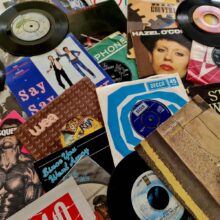
During the vinyl, cassette and CD decades, every chart unit represented a purchase. A consumer made a conscious financial decision to acquire music. Ownership was the metric. Modern charts measure activity inside digital platforms.
A billion streams may appear comparable to millions of album sales, but the underlying consumer behaviour is entirely different. One reflects repeated interactions within a subscription ecosystem. The other reflected direct commercial commitment.
The music industry has confronted similar measurement challenges before.
When Billboard adopted Nielsen SoundScan on May 25, 1991, chart compilers immediately recognised that comparisons with earlier eras required caution. Before SoundScan, Billboard relied on surveys of retailers who manually reported what they believed was selling. SoundScan replaced those estimates with verified barcode scans from thousands of cash registers.
The impact was immediate and dramatic. Genres that had previously been underrepresented, including country, hip-hop, alternative rock and heavy metal, suddenly surged up the charts because actual consumer purchases were finally being counted. Long-held assumptions about market share and popularity were overturned almost overnight.
Industry analysts quickly understood that a pre-1991 chart position could not be evaluated using the same framework as a SoundScan-era chart position. One system measured informed estimates. The other measured audited transactions.
Streaming has now created another methodological break.
Just as chart historians distinguish between pre-SoundScan and SoundScan eras, many analysts argue that streaming-era rankings should be viewed as a separate category altogether. The current system combines physical sales, downloads and streams into a single equivalent-unit calculation. Within that framework, active listens, passive listens and varying subscription tiers receive different weighting.
Supporters of streaming argue the system reflects how audiences consume music in 2026 and provides opportunities for artists to reach global audiences without traditional retail barriers. Critics counter that passive consumption, playlist influence and artificial activity dilute the relationship between chart success and genuine fan engagement.
What remains clear is that music charts have never been static. Every major technological shift has forced the industry to redefine how popularity is measured.
The charts of the pre-SoundScan era measured retailer perception. The SoundScan era measured verified purchases. The streaming era measures digital consumption across billions of interactions.
Each system reflects its time. None are directly interchangeable.
Previous Noise11 story:
https://www.noise11.com/news/streaming-charts-cannot-be-compared-to-physical-sales-era-20260528
Stay updated with your free Noise11.com daily music news email alert. Subscribe to Noise11 Music News here
Be the first to see NOISE11.com’s newest interviews and special features on YouTube. See things first—Subscribe to Noise11 on YouTube
Follow Noise11.com on social media:
Bluesky
Facebook – Comment on the news of the day