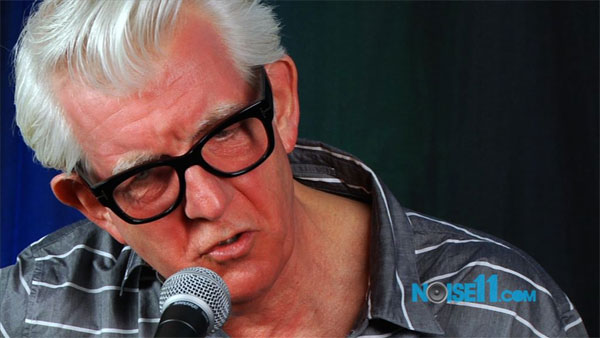

Soul and blues singer Clarence Carter, best known for hits including Slip Away, Patches and Strokin’, has died at the age of 90 after complications from pneumonia.
by Paul Cashmere
American soul singer, songwriter and producer Clarence Carter, whose career stretched across six decades and produced enduring R&B hits including Slip Away, Patches and Strokin’, has died aged 90. Carter reportedly died on May 13 or May 14, 2026, following complications from pneumonia. Reports from the United States also indicated he had recently been diagnosed with prostate cancer.
Born blind in Montgomery, Alabama on January 14, 1936, Carter became one of the defining Southern soul voices of the late 1960s and early 1970s. His recordings for Atlantic Records and the legendary Fame Studios in Muscle Shoals helped establish a sound that bridged gospel, blues, country and R&B, while his later recordings introduced him to a younger audience through humour-driven adult blues material.
Carter’s death marks the passing of one of the last surviving artists from the classic Muscle Shoals era. His recordings stood alongside releases by artists such as Aretha Franklin, Wilson Pickett and Etta James during a transformative period for Southern soul music. Carter’s deep baritone voice and conversational delivery gave his songs a distinctive identity, often blending heartbreak narratives with sharply observed storytelling.
His professional career began in the early 1960s with musical partner Calvin Scott. Performing initially as Clarence & Calvin, the duo released early singles including I Wanna Dance But I Don’t Know How before later recording as The C & C Boys for Duke Records. Commercial success proved elusive in the early years, despite sessions at Rick Hall’s Fame Studios in Alabama.
Carter’s breakthrough arrived after Scott was seriously injured in a car accident in 1966, leading Carter to pursue a solo career. His 1967 recording Tell Daddy reached the Billboard R&B chart and later inspired Etta James’ response record Tell Mama, which credited Carter as songwriter.
After signing with Atlantic Records in late 1967, Carter entered his most commercially successful period. Slip Away became a major crossover hit in 1968, reaching No. 2 on the R&B chart and No. 6 on the US pop chart. The single, driven by the Fame Studios rhythm section, established Carter as a major soul artist. Follow-up singles including Too Weak To Fight, Snatching It Back and The Feeling Is Right consolidated his chart presence.
Later in 1968, Carter released Back Door Santa, a funk-driven seasonal single that developed a second life decades later after Run-D.M.C. sampled its horn arrangement for Christmas In Hollis. The song also became a recurring part of American holiday playlists for audiences seeking alternatives to traditional Christmas music.
Carter achieved his biggest international success in 1970 with Patches, his interpretation of the song first recorded by Chairmen of the Board. The record reached No. 4 in the United States and No. 2 in the United Kingdom, selling more than one million copies and earning a Grammy Award for Best R&B Song in 1971.
Away from music, Carter was briefly married to soul singer Candi Staton. Staton had previously worked as one of Carter’s backing vocalists before the pair married in 1970. They later divorced in 1973.
By the mid-1970s, Carter’s mainstream commercial momentum had slowed as disco reshaped the music industry. He continued recording throughout the decade for labels including ABC Records, releasing albums such as Loneliness & Temptation. However, his career experienced an unlikely revival in the 1980s after signing with Ichiban Records.
The turning point came with Strokin’ in 1986. The sexually explicit novelty-blues track initially struggled to secure mainstream radio support due to its lyrical content.
According to long-circulated industry accounts, the record found its audience through jukebox placements in bars and clubs before becoming one of Carter’s signature songs. Strokin’ later appeared in films including The Nutty Professor remake starring Eddie Murphy and William Friedkin’s Killer Joe.
Carter continued touring extensively across the Southern United States and internationally into later life, maintaining a loyal audience among blues and Southern soul fans. He also established his own label, Cee Gee Entertainment, in the mid-1990s and continued releasing recordings well into the 21st century.
While Carter’s chart profile faded after his peak years, his influence remained visible through sampling culture, soundtrack placements and the continued popularity of his catalogue among blues audiences. Songs such as Slip Away and Patches remained staples of oldies and soul radio formats, while Back Door Santa found renewed relevance every Christmas season through hip-hop culture.
Clarence Carter is survived by his family and an extensive catalogue that captured the evolution of Southern soul from the civil rights era through contemporary blues.
Stay updated with your free Noise11.com daily music news email alert. Subscribe to Noise11 Music News here
Be the first to see NOISE11.com’s newest interviews and special features on YouTube. See things first-Subscribe to Noise11 on YouTube
Follow Noise11.com on social media:
Bluesky
Instagram
Facebook – Comment on the news of the day
X (Twitter)