
As the music world marks what would have been Syd Barrett’s 80th birthday, Pink Floyd’s founding drummer Nick Mason has reflected on the brief, brilliant and ultimately tragic creative arc of the band’s original frontman, a figure whose influence still reverberates through rock music nearly six decades after his departure from the group.
The Noise11 Nick Mason interview
Roger Keith “Syd” Barrett, born in Cambridge on 6 January 1946, was Pink Floyd’s primary songwriter, guitarist and conceptual force during the band’s formative years. His imagination shaped their earliest recordings, most notably the 1967 debut album The Piper At The Gates Of Dawn, a record that remains a cornerstone of British psychedelia. Speaking to Noise11, Mason described Barrett as a songwriter of rare originality whose promise was cut short far too early.
“One of the tragedies of Syd is that when I first met him he was enormously personable and cheerful, and really a great writer,” Mason said. “The Piper album is full of really interesting and really different songs, all within one genre really. If he hadn’t had the breakdown, I think he could have gone on to be a fantastic songwriter and written all sorts of things.”
Barrett’s creativity defined Pink Floyd’s early identity. Drawing on fairy tales, literature and surreal wordplay, his songs such as Arnold Layne, See Emily Play, Astronomy Domine and Bike stood apart from anything else emerging from the London underground at the time. Mason has often noted that many of the band’s earliest ideas came directly from Barrett, a fact underscored by the enduring fascination with Floyd’s pre-Dark Side Of The Moon era.
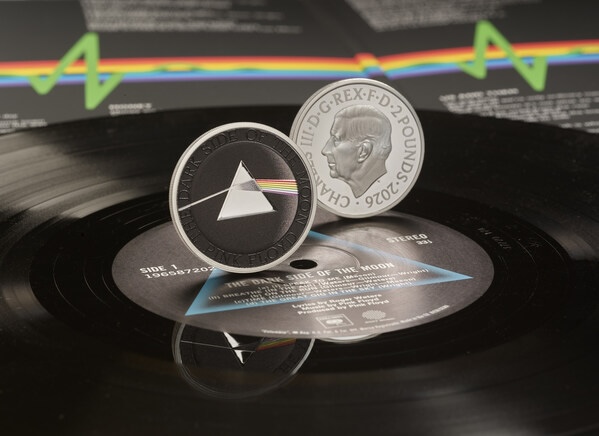
“It’s inevitable that the early work is overtaken by the more popular records like The Dark Side Of The Moon and The Wall,” Mason said. “But what’s important about the earlier work is that it shows where we came from and then went to. What’s quite nice about revisiting it is the rediscovery of that material.”
Barrett’s time with Pink Floyd was short. As his behaviour became increasingly erratic during 1967 and early 1968, the band struggled to function. Mason recalled that, painful as it was, Barrett’s departure brought an unexpected sense of relief.
“Looking back, what’s surprising is that we thought we could carry on without Syd,” Mason said. “By then he’d become so disjointed that it just wasn’t a pleasure to be in a band and playing music anymore. When David (Gilmour) came in and Syd went out, there was an enormous sense of relief, even though we’d lost our main songwriter and frontman.”
The band briefly considered keeping Barrett as a non-touring writer, an idea borrowed from The Beach Boys’ arrangement with Brian Wilson, but Mason admitted it was never realistic. “Both management and Syd thought that wouldn’t work, and I don’t think it would have worked,” he said.
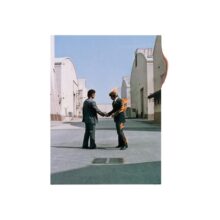
Despite his exit from Pink Floyd in April 1968, Barrett’s shadow never left the band. His presence lingered most famously during the Wish You Were Here sessions in 1975, when he appeared unannounced at Abbey Road Studios while the band were mixing Shine On You Crazy Diamond, their extended musical tribute to him.
“That was very odd,” Mason recalled. “I came into the control room and there was this large old guy. David said, ‘Don’t you know who that is?’ and I said no. I just didn’t recognise him.” It was the last time Mason ever saw Barrett.
Barrett recorded two solo albums, The Madcap Laughs and Barrett, both released in 1970 with assistance from David Gilmour and Roger Waters. Mason chose not to be directly involved. “At that point I don’t think I was that keen to get involved anyway,” he said, though he acknowledged the quality of the work Barrett produced in that period.
In later years, Barrett withdrew completely from the music industry, returning to Cambridge to paint and garden, living quietly until his death from pancreatic cancer in 2006. He left behind a small but extraordinary body of work that continues to inspire musicians and listeners alike.
For Mason, revisiting the music of Pink Floyd’s earliest years is not about nostalgia but about honouring the spirit Barrett brought to the band. “At the time when we were playing with Syd there was a lot of improvising that went on,” he said. “If we can occasionally fall back to that point, it gives an indication of what we were doing in 1967 and 1968.”
On what would have been his 80th birthday, Syd Barrett remains not just a foundational figure in Pink Floyd’s story, but one of British rock’s great what-ifs, a songwriter whose brief blaze of creativity permanently altered the course of modern music.
Stay updated with your free Noise11.com daily music news email alert. Subscribe to Noise11 Music News here
Be the first to see NOISE11.com’s newest interviews and special features on YouTube. See things first—Subscribe to Noise11 on YouTube
Follow Noise11.com on social media:
Bluesky
Facebook – Comment on the news of the day