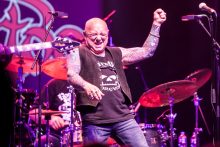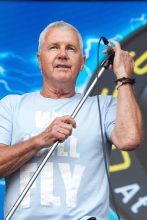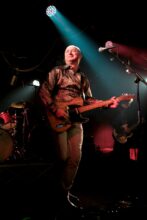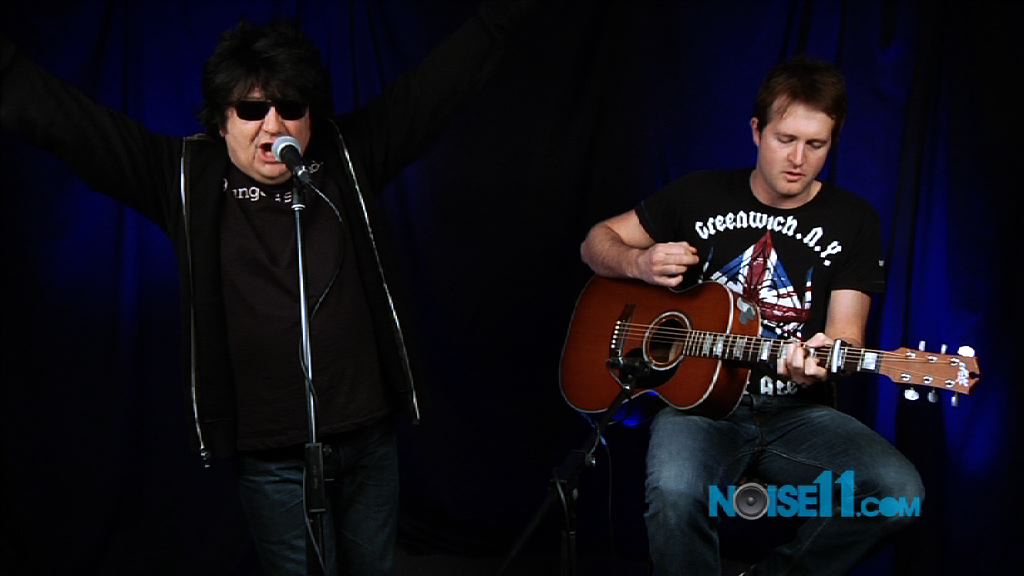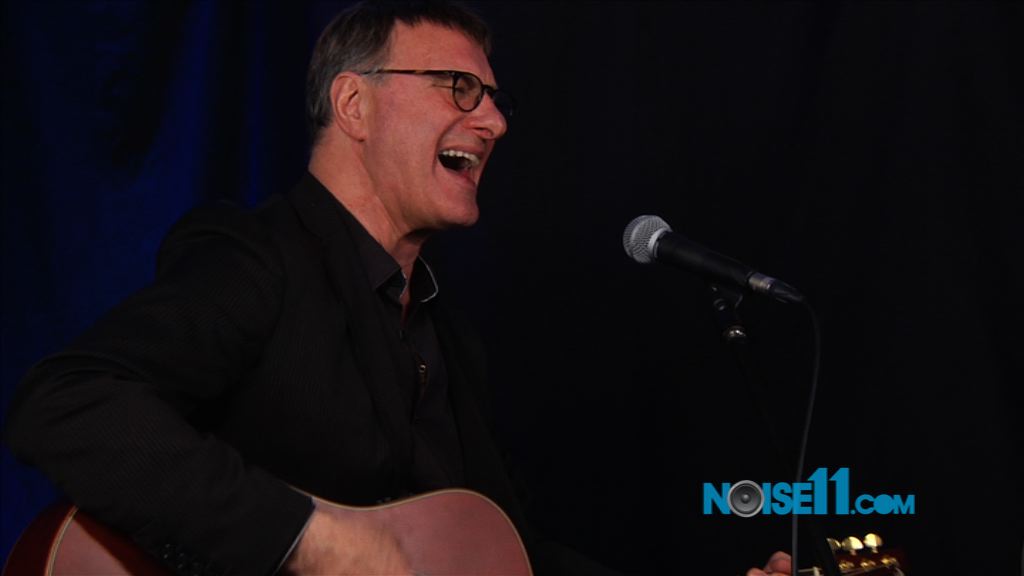

The Rose Tattoo frontman had been at the centre of the Australian rock band for 50 years, surviving every member of its original lineup and becoming one of the country’s most recognisable rock voices.
by Paul Cashmere
Gary “Angry” Anderson, the voice of Rose Tattoo and one of the defining figures in Australian rock, has died at the age of 79, with his family confirming that he passed away on the eve of Monday 21 September 2026 surrounded by loved ones in Australia.
The family described Anderson as a devoted father and much-loved bandmate, friend and member of Australia’s wider music and entertainment community. No cause of death has been given. In August, Anderson was hospitalised following a cardiac arrest, after which Rose Tattoo cancelled European dates.
Anderson’s death closes a career that began in Melbourne before taking him into the heart of Australia’s hard rock movement. He became Rose Tattoo’s lead singer in 1976 and remained the band’s longest-tenured member, surviving every member of the original lineup and continuing to front the group for five decades.
For Rose Tattoo, the loss comes during what was intended to be the band’s 50th anniversary year. The group had announced plans for a final run of shows in 2026, making Anderson’s death an unexpected end to the story of a band that began at Sydney’s Chequers nightclub on New Year’s Eve in 1976.
Anderson was not originally destined to become a frontman. Growing up in Melbourne, he initially wanted to be a blues guitarist and later cited Bob Dylan and John Lennon among his influences. He eventually found himself in a band where other musicians were stronger guitarists, leaving singing as the obvious role. That decision set the course for one of Australia’s most recognisable rock voices.
Before Rose Tattoo, Anderson fronted Buster Brown, the blues rock band that also featured future AC/DC drummer Phil Rudd. Buster Brown released the album Something To Say in 1975 before breaking up later that year. Anderson moved to Sydney and joined Peter Wells’ newly formed Rose Tattoo in 1976.
The band quickly established a reputation for hard, blues-influenced rock, with Anderson’s voice at its centre. “Bad Boy For Love” became Rose Tattoo’s biggest Australian chart single, reaching No. 19 in 1977. Songs including “Rock ‘N’ Roll Outlaw”, “Nice Boys”, “We Can’t Be Beaten” and “Scarred For Life” would become enduring parts of the Australian rock catalogue.
Rose Tattoo’s history was marked by repeated departures, reunions and loss. The original members gradually disappeared from the lineup, with Anderson ultimately becoming the sole surviving original member. Peter Wells and Ian Rilen died in 2006, Lobby Loyde died in 2007, and Mick Cocks died in 2009. Drummer Dallas Royall had died earlier, in 1991. Rose Tattoo was inducted into the ARIA Hall of Fame in 2006.
Anderson also had a second, very different chapter as a solo artist. His 1987 ballad “Suddenly” became an international hit after it was used as the wedding song for Scott Robinson and Charlene Mitchell, played by Jason Donovan and Kylie Minogue, on Neighbours. The song reached No. 3 in the UK and became one of the most unexpected crossover moments of an Australian hard rock singer’s career.
Away from music, Anderson became a television personality, actor and youth advocate. He appeared as Ironbar Bassey in Mad Max Beyond Thunderdome and received a Member of the Order of Australia in 1993 for service to the community, particularly as a youth advocate. His community work included organising charity challenges and supporting causes involving disadvantaged children, young people and health.
The family said Anderson’s loss “will be deeply felt by all those who knew and loved him both here in Australia and overseas”. They and the band members have asked for privacy and confirmed they will not be giving interviews while they grieve.
Anderson leaves behind a recorded legacy that stretches from Buster Brown and Rose Tattoo through “Suddenly” and beyond, but his defining musical identity remained the voice he brought to Rose Tattoo from 1976 onwards. The band that began with a New Year’s Eve gig five decades ago now faces its future without the man who had been at its centre for almost all of its existence.
Stay updated with your free Noise11.com daily music news email alert. Subscribe to Noise11 Music News here
Be the first to see NOISE11.com’s newest interviews and special features on YouTube. See things first-Subscribe to Noise11 on YouTube
Follow Noise11.com on social media:
Facebook – Comment on the news of the day