
English guitarist and songwriter Dave Mason, a founding member of Traffic and solo artist behind Feelin’ Alright and We Just Disagree, has died aged 79, closing a six-decade career that shaped rock’s classic era.
by Paul Cashmere
Dave Mason, the English guitarist, singer and songwriter best known as a founding member of Traffic and the writer behind Feelin’ Alright? and We Just Disagree, has died on 19 April 2026 aged 79. Mason passed away following ongoing health challenges that had forced him to step away from touring in recent years, ending a career that began in 1966 and stretched across six decades of rock history.
Born David Thomas Mason in Worcester, England on 10 May 1946, Mason became one of the defining guitar voices of late 60s and 70s rock, moving between Traffic, solo work, and collaborations with some of the most influential artists of the era.
Mason’s importance sits not only in his solo catalogue but in the connective tissue he provided across rock’s most formative years. As a founding member of Traffic, his songwriting helped shape the band’s early identity, particularly with Hole In My Shoe and Feelin’ Alright?, a song that would become a global standard after being reinterpreted by artists including Joe Cocker.
His later solo career produced enduring radio staples, most notably We Just Disagree, which became a defining adult contemporary and classic hits track in the United States. Beyond his own records, Mason’s session work placed him inside landmark recordings by Jimi Hendrix, The Rolling Stones, George Harrison, Eric Clapton and Fleetwood Mac, positioning him as a key contributor to the sound of late 20th century rock.
Mason’s first major breakthrough came with Traffic in 1967, a band he helped form alongside Steve Winwood and Jim Capaldi. Although his time in the group was intermittent, his creative imprint was significant. He wrote and sang lead on early signature songs including Hole In My Shoe and Feelin’ Alright?, tracks that established Traffic as a major force in British rock’s progressive evolution.
His approach inside Traffic was distinctive, often arriving with fully formed compositions and expecting direct execution from the band. That creative tension contributed to his repeated departures and returns between 1967 and 1971, including contributions to Traffic and Welcome To The Canteen.
Outside the band, Mason became one of the most in-demand session musicians of his generation. His work includes 12-string acoustic guitar on Jimi Hendrix’s All Along The Watchtower from Electric Ladyland, and contributions to The Rolling Stones’ Beggars Banquet on Street Fighting Man. He also played on George Harrison’s All Things Must Pass, and early Derek And The Dominos sessions with Eric Clapton.
His solo breakthrough came with Alone Together in 1970, featuring Only You Know And I Know, which charted in the United States and established him as a solo voice. The 1977 album Let It Flow became his commercial peak, driven by We Just Disagree, a song written by Jim Krueger that reached No. 12 in the US and became Mason’s defining solo moment.
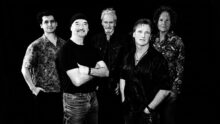
Across the late 1970s, Mason continued releasing albums including Mariposa De Oro and Old Crest On A New Wave, while also appearing in film and touring extensively with his band featuring Mike Finnigan, Gerald Johnson and Rick Jaeger.
Mason’s career unfolded during a period when British musicians were deeply embedded in the evolution of global rock. His movement between Traffic, solo work, and collaborations reflected a wider culture of fluid band membership in the late 1960s and early 1970s, where artists frequently crossed projects and genres.
His role as both songwriter and session contributor placed him in the centre of rock’s most influential recording era. From Hendrix to Harrison, Clapton to The Rolling Stones, Mason’s guitar work and vocal presence became part of the sonic architecture of landmark albums.
Later in life, Mason expanded beyond performance. In 2004 he co-founded RKS Guitars with industrial designer Ravi Sawhney, introducing modular electric guitar design and sustainable materials. The project earned international design recognition and was studied in business innovation circles, reflecting Mason’s interest in music technology as much as performance.
He was inducted into the Rock And Roll Hall Of Fame in 2004, cementing his legacy within the broader history of modern music.
While Mason’s influence is widely acknowledged, his career was not without complexity. His tenure in Traffic was marked by creative friction, with Steve Winwood later describing Mason’s approach as highly individualised and uncompromising in arrangement style.
His solo career, while producing major hits, also faced periods of commercial inconsistency, particularly in the early 1980s when label support shifted following underperforming releases. Despite this, Mason maintained a steady touring presence and continued to release new material into the 21st century.
His brief involvement with Fleetwood Mac in the mid-1990s also demonstrated the unpredictable nature of his career trajectory, contributing to the album Time and touring cycle before exiting the project.
Dave Mason’s legacy is defined by reach rather than limitation. From Traffic’s formative experiments to some of rock’s most enduring recordings, and from charting solo success to elite session work, his footprint runs through the core of modern rock history.
Although touring ended in 2025 due to health issues, Mason continued to record and release music, signalling a creative drive that never fully slowed. His passing closes a chapter that spans the psychedelic 1960s through to contemporary classic rock culture, leaving behind a catalogue that remains deeply embedded in global music history.
Stay updated with your free Noise11.com daily music news email alert. Subscribe to Noise11 Music News here
Be the first to see NOISE11.com’s newest interviews and special features on YouTube. See things first—Subscribe to Noise11 on YouTube
Follow Noise11.com on social media:
Bluesky
Facebook – Comment on the news of the day