
A Las Vegas jury has convicted Duane “Keffe D” Davis of first-degree murder for his role in the 1996 killing of Tupac Shakur, ending one of hip-hop’s longest-running murder investigations.
by Paul Cashmere
Duane “Keffe D” Davis has been found guilty of the murder of Tupac Shakur, almost 30 years after the rapper was fatally shot in a drive-by attack in Las Vegas. A Clark County jury deliberated for about three hours before returning a guilty verdict on Monday on a single count of first-degree murder with use of a deadly weapon. Davis, 63, told Judge Carli Kierny that he intends to appeal.
Davis was accused of orchestrating the shooting after his nephew, Orlando “Baby Lane” Anderson, was beaten by members of Shakur’s entourage at the MGM Grand earlier on September 7, 1996. Prosecutors argued that Davis obtained a firearm, assembled a group and went looking for Shakur and Death Row Records co-founder Marion “Suge” Knight.
The conviction marks a major development in a case that remained unresolved for decades and became one of the most closely followed mysteries in popular music. Shakur was 25 when he was shot four times while travelling in a BMW driven by Knight. He died six days later, on September 13, 1996.
The prosecution’s case relied heavily on Davis’ own words. Authorities had long suspected Davis but did not charge him until 2023, after years in which he discussed the killing in interviews, conversations with investigators and his 2019 memoir, Compton Street Legend.
Chief Deputy District Attorney Binu Palal told jurors that Davis’ statements established his involvement. Davis’ defence lawyer, Michael Sanft, argued that those statements were unreliable and represented embellished stories intended to capitalise on the enduring interest in Shakur’s murder.
“You’re reading a book that is fiction and not fact,” Sanft told the jury, arguing that there was no independent evidence proving Davis was present in the Cadillac.
During the trial, prosecutors played approximately eight hours of recordings from several separate encounters in which Davis described the events surrounding the shooting. According to his accounts, Davis was travelling in a white Cadillac with three other men, including Anderson, when they went searching for Shakur and Knight.
Davis said he passed a firearm to the back seat. When the Cadillac pulled alongside Shakur and Knight at a red light, one of the passengers opened fire. Prosecutors have never identified the person who fired the shots. The three other men in the Cadillac have since died.
Under Nevada law, Davis could be convicted of murder even though prosecutors did not allege that he personally fired the weapon.
The circumstances surrounding Shakur’s death have been intertwined with the violent period of 1990s American hip-hop. At the time, the rivalry between Los Angeles-based Death Row Records and New York-based Bad Boy Records had become closely associated with the broader East Coast and West Coast conflict.
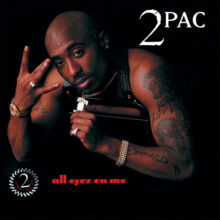
Shakur had become one of the most commercially successful and influential rappers of his generation. His catalogue included California Love and All Eyez On Me, while his writing addressed poverty, racism, police brutality, violence and social inequality.
His relationship with The Notorious B.I.G., whose real name was Christopher Wallace, also became central to the mythology surrounding the era. The pair had initially been friends, but their relationship deteriorated following Shakur’s 1994 shooting in New York and the escalation of tensions between their respective musical camps.
Shakur’s 1996 recording “Hit ‘Em Up” intensified the public feud. Six months after Shakur’s death, Wallace was also killed in a drive-by shooting in Los Angeles. No one has been convicted or formally charged with Wallace’s murder.
For years, the lack of progress in the Shakur investigation fuelled conspiracy theories and competing claims about who was responsible. Investigators faced difficulties securing physical evidence and cooperation from witnesses. Some potential witnesses were reluctant to participate, while others connected to the case died before they could provide testimony.
Davis ultimately became an unusual central figure in the prosecution’s case because of the extent to which he had publicly discussed the killing. Prosecutors argued that his repeated accounts, including material contained in his memoir, provided evidence of his role in organising the attack.
The defence maintained that Davis had repeatedly exaggerated his involvement and that the case was compromised by investigative failures, missing files and alleged police misconduct.
The jury’s verdict provides a legal conclusion to the prosecution of Davis, but it does not identify the person who fired the fatal shots. Davis remains the only person charged in connection with Shakur’s murder.
Davis is scheduled to be sentenced on October 13. First-degree murder in Nevada carries a possible sentence ranging from 20 years to life imprisonment. Prosecutors did not seek the death penalty and withdrew a proposed gang enhancement following the verdict.
For Shakur’s family and generations of fans, the conviction closes a chapter that has remained open since 1996. The case may now move into the appeals process, while the identity of the gunman remains an unresolved part of the historical record.
Stay updated with your free Noise11.com daily music news email alert. Subscribe to Noise11 Music News here
Be the first to see NOISE11.com’s newest interviews and special features on YouTube. See things first-Subscribe to Noise11 on YouTube
Follow Noise11.com on social media:
Facebook – Comment on the news of the day