
Prime Minister Anthony Albanese’s apology over comments made during a comedy podcast has reignited debate about the standards expected of Australia’s political leaders, while also raising questions about whether the controversy has been amplified beyond the significance of the original remarks.
by Paul Cashmere
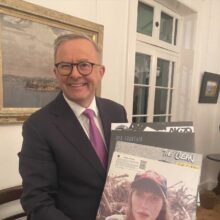
Prime Minister Anthony Albanese has apologised after comments made during an appearance on comedian Nikki Osborne’s Bush Deep podcast triggered criticism from across the political spectrum. The controversy centres on Albanese’s participation in a hypothetical “shag, marry, date” segment involving Kylie Minogue, Nicole Kidman and Rhonda Burchmore, a conversation that ultimately prompted the Prime Minister to issue an unequivocal public apology.
The incident has become more than a discussion about a single podcast appearance. It has evolved into a broader debate about how politicians engage with modern media, whether informal podcast formats blur the boundaries of acceptable conduct, and whether the subsequent media coverage reflected legitimate scrutiny or an attempt to manufacture another political “gotcha” moment.
During the interview, Osborne invited Albanese to play the long-running party game. The Prime Minister initially attempted to avoid answering, noting that he had only been married for six months. After further prompting, including a hypothetical scenario about his marriage ending, Albanese nominated Kylie Minogue before agreeing with Osborne’s suggestion that his answer amounted to “all of the above”. He also responded to a separate question about his married sex life.
The exchange immediately drew criticism from figures on both sides of politics. Independent MP Zali Steggall argued the discussion reduced women to objects, while Liberal Senator Sarah Henderson said the comments diminished the dignity expected of Australia’s highest elected office. Workplace commentators also noted that similar sexually explicit exchanges would likely breach acceptable standards in many Australian workplaces.
Rather than defend the interview as harmless humour, Albanese chose to apologise quickly, effectively acknowledging that the comments fell below the standard he expected of himself as Prime Minister.
That response has done little to end debate over whether the controversy itself has become larger than the original offence.
Supporters argue the Prime Minister appeared on a comedy podcast where irreverent questions are part of the format. Albanese initially resisted participating before eventually responding after repeated encouragement from the host. They also point to the increasingly common strategy of political leaders appearing on podcasts, FM radio programs and digital platforms in an effort to connect with younger audiences who rarely consume traditional political interviews.
Senior Labor figures initially downplayed the incident, suggesting admiration for Kylie Minogue was hardly unusual given her status as one of Australia’s most successful entertainers. That defence was largely abandoned once the apology was issued.
Whether the reaction has been proportionate depends largely on where observers believe the line should be drawn between relatability and responsibility.
Australian political history offers numerous examples of leaders whose comments about women generated far greater and longer lasting controversy.
Former Prime Minister Tony Abbott faced sustained criticism after praising Liberal candidate Fiona Scott’s “sex appeal” during the 2013 election campaign while overlooking her professional qualifications. His repeated references to “housewives” when discussing household budgets further reinforced criticism that his language reflected outdated attitudes toward women.
Scott Morrison also endured widespread backlash during 2021 after telling March4Justice protesters they were fortunate to live in a country where demonstrations were not “met with bullets”. His explanation that his wife Jenny helped him understand allegations of sexual assault through the perspective of their daughters similarly became a defining political controversy.
Former Liberal Party Federal President Alan Stockdale apologised after suggesting that “men needed protection” during a debate about gender quotas, while Barnaby Joyce’s criticism that Albanese’s podcast comments were “beneath the office” prompted accusations of political hypocrisy given Joyce’s own well documented personal controversies.
Against that backdrop, Albanese’s podcast appearance appears less remarkable than many previous political controversies, although critics argue comparisons with worse examples do not excuse poor judgment.
The media’s handling of the story has also become part of the conversation. Critics of some sections of the Australian media argue the incident received days of rolling coverage that far exceeded its political importance, transforming an admittedly awkward podcast appearance into a dominant national story.
Others reject that criticism, arguing the Prime Minister voluntarily entered the interview, answered the questions and therefore should expect the same scrutiny applied to any public figure. They contend reporting the apparent contradiction between Labor’s emphasis on respectful behaviour and Albanese’s participation in a sexually charged game represents legitimate accountability rather than sensationalism.
Both arguments contain elements of truth.
The original reporting reflected a genuine public interest issue involving the conduct of a sitting Prime Minister. Albanese himself accepted that reality by apologising promptly rather than dismissing the criticism. At the same time, the extended political and media cycle surrounding the story illustrates how relatively minor missteps can dominate public discussion when they intersect with culture, personality and partisan politics.
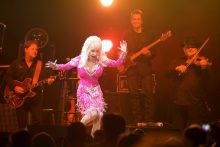
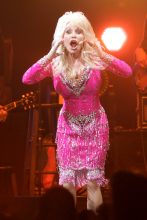
For music fans, Kylie Minogue’s brief appearance in the national political conversation serves as another reminder of her unique place in Australian popular culture. Few artists could find themselves unexpectedly at the centre of a political controversy simply by being mentioned in a hypothetical podcast game.
Stay updated with your free Noise11.com daily music news email alert. Subscribe to Noise11 Music News here
Be the first to see NOISE11.com’s newest interviews and special features on YouTube. See things first-Subscribe to Noise11 on YouTube
Follow Noise11.com on social media:
Facebook – Comment on the news of the day
Bluesky
Instagram
X (Twitter)