
Donald Trump has lashed out at Bruce Springsteen following the rock legend’s scathing opening night speech in Minneapolis, calling for a boycott of the E Street Band.
by Paul Cashmere
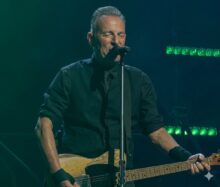
Bruce Springsteen launched his 2026 Land Of Hope And Dreams American tour at the Target Center in Minneapolis on Tuesday night, 31 March 2026, with a set that was as much a political statement as a musical one. During the performance, Springsteen delivered a pointed address to the audience, describing the current administration as “corrupt, incompetent, racist, reckless and treasonous.” In a swift and aggressive response, Donald Trump took to social media to blast the rock icon, labelling him a “loser” and urging his followers to boycott Springsteen’s “overpriced” concerts.
The escalation between the legendary songwriter and the political figure signifies a deepening rift in the American cultural landscape. While Springsteen has spent over fifty years chronicling the American dream and its failures, Trump’s retaliation suggests a total rejection of the artist’s role as a civic critic. For the music industry, this public feud highlights the volatile intersection of celebrity influence and polarized politics, where a concert stage becomes a frontline for ideological warfare.
During the Minneapolis show, Springsteen opened with a prayer for American troops serving in the war in Iran, before calling upon the “righteous power of rock and roll” to defend democratic ideals. He urged the crowd to choose “hope over fear” and “democracy over authoritarianism,” punctuated by a high-octane performance of the soul classic War and his own anthem Born In The USA. Trump’s rebuttal was personal and visceral, describing Springsteen as a “bad, and very boring singer” who looks like a “dried up prune who has suffered greatly from the work of a really bad plastic surgeon.” Trump claimed the singer has an “incurable case of Trump Derangement Syndrome,” or TDS, and asserted his own dominance by citing his 2024 election statistics, including winning “86% of the Counties across America.”
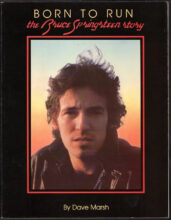
Bruce Springsteen’s catalogue has long been anchored in social observation, a journey that began with his 1973 debut Greetings From Asbury Park, N.J. His career reached a definitive peak with 1975’s Born To Run, an album that captured the restless spirit of the American working class. By the time he released the stark, acoustic Nebraska in 1982, his transition into a political poet was complete. The 1984 blockbuster Born In The USA cemented his status as a global superstar, though the title track’s critique of the Vietnam War was famously misunderstood by politicians at the time. This 2026 tour places Springsteen in the twilight of an extraordinary career, yet shows he is unwilling to retreat into the safety of a “greatest hits” nostalgia act.
From a psychiatric perspective, the language used in Trump’s response reveals significant psychological defense mechanisms. Experts observing the rhetoric note a pattern of “splitting,” a cognitive distortion where individuals are categorised as entirely good or entirely bad. By devaluing Springsteen’s physical appearance and professional talent, the speaker attempts to neutralize the threat to his own ego. The use of “Trump Derangement Syndrome” is identified by linguists and mental health observers not as a clinical diagnosis, but as a political neologism used to pathologize dissent. This strategy frames political disagreement as a medical malady, effectively invalidating the opposition’s arguments as mere symptoms rather than valid critiques.
While Springsteen’s fans rallied behind his call for “resistance over complacency,” critics of the musician argue that performers should stick to entertainment. Supporters of the President view the rant as a justified defence against a “treasonous” characterization of the government. They argue that Springsteen’s high ticket prices make his “working-class hero” persona hypocritical, a point Trump echoed in his call for a boycott. This alternate view suggests that the “Land Of Hope And Dreams” is, for many, a place where they no longer wish to hear political sermons from multi-millionaire rock stars.
As the E Street Band moves through the 2026 tour circuit, the tension between art and administration remains at a breaking point. Springsteen has made it clear that he views this tour as a defence of the American promise, while Trump is equally committed to delegitimizing the singer’s voice. For the audience, the choice remains between the music and the message, or perhaps, recognizing that in the hands of Bruce Springsteen, they have always been one and the same.
Stay updated with your free Noise11.com daily music news email alert. Subscribe to Noise11 Music News here
Be the first to see NOISE11.com’s newest interviews and special features on YouTube. See things first—Subscribe to Noise11 on YouTube
Follow Noise11.com on social media:
Bluesky
Facebook – Comment on the news of the day