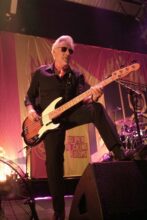

Television bassist Fred Smith, a foundational figure of the New York punk and art rock movement, has died at the age of 77, leaving behind a body of work that helped define one of the most influential bands to emerge from CBGB in the 1970s.
by Paul Cashmere
Fred Smith, best known as the bassist for Television and an early member of Blondie, has died aged 77. The news was confirmed via Television’s official social media channels, with guitarist Jimmy Rip later noting that Smith had battled illness for several years. His passing follows the 2023 death of Television frontman and principal songwriter Tom Verlaine, effectively closing the final chapter on one of New York City’s most revered bands.
Born on April 10, 1948, Smith was part of the first generation of musicians who transformed the Bowery club CBGB into the epicentre of a cultural shift. While Television never achieved significant commercial success during their original run, their influence on punk, new wave and alternative music has proved vast and enduring.
Smith’s musical journey intersected with several key strands of the New York scene.
Before joining Television, he was the original bassist in Angel And The Snake, the group formed by Debbie Harry and Chris Stein that would later become Blondie. Smith departed Blondie in early 1975, before the band entered the studio, choosing instead to replace Richard Hell in Television. At the time, both bands were playing residencies at CBGB, often on the same bills, helping to shape what would become the mythology of the era.
Television had formed in 1973, evolving from the Neon Boys, an earlier group featuring Verlaine and Hell. By the time Smith joined in 1975, the band had settled into the classic lineup of Verlaine, Richard Lloyd, Billy Ficca and Smith. That year marked a crucial turning point, with Television’s extended residency at CBGB sharpening their sound and building a devoted following among musicians and critics alike.
Smith appeared on all three of Television’s studio albums. The 1977 debut Marquee Moon is widely regarded as a landmark release, praised for its intertwining guitars, improvisational structure and disciplined restraint. Smith’s bass work was central to that balance, anchoring long, exploratory passages without drawing attention away from the ensemble. His playing was melodic and economical, providing counterpoint rather than propulsion, a quality that became a defining feature of the band’s sound.
Television followed with Adventure in 1978, a more reflective and understated album that again showcased Smith’s subtle musical instincts. Shortly after its release, internal tensions and limited commercial returns led to the band’s initial breakup. Smith remained closely connected to his bandmates, contributing to solo albums by Verlaine and Lloyd and maintaining a low profile within the wider industry.
In 1992, Smith rejoined Television for a reunion that produced their self-titled third album. Although the record arrived in a vastly different musical landscape, it reaffirmed the band’s identity and led to intermittent touring over the following decades. From 2001 onwards, Television performed sporadically, often revisiting Marquee Moon in full for audiences who had come to recognise its long-term significance. Smith remained part of the lineup through these years, including after Lloyd’s departure in 2007, when Jimmy Rip joined as guitarist.
Outside Television, Smith played with a range of artists connected to the New York underground, including Willie Nile, The Roches, Peregrins, The Revelons and The Fleshtones. His reputation among peers was that of a musician who prioritised the song and the collective over individual display, a philosophy that mirrored Television’s broader aesthetic.
In later life, Smith pursued a markedly different creative outlet. In 1999, he and his wife, artist Paula Cereghino, began making wine in their New York City apartment. What started as a small-scale experiment grew into the Cereghino Smith winery, formally established in upstate New York in 2007. The project reflected Smith’s methodical, hands-on approach, applying the same patience and craft that characterised his music.
Fred Smith’s legacy is inseparable from Television’s place in music history. Alongside bands like Talking Heads, Blondie and the Ramones, Television helped redefine what rock music could be, drawing on jazz, minimalism and garage rock while rejecting blues conventions. Smith’s bass lines were integral to that vision, understated yet essential, and continue to be studied by musicians seeking alternatives to orthodox rock roles.
With his passing, the era that Television represented moves further into history, but the records remain. Marquee Moon in particular stands as a testament to a moment when restraint, interplay and imagination reshaped the possibilities of guitar-based music, with Fred Smith’s bass quietly holding it all together.
Stay updated with your free Noise11.com daily music news email alert. Subscribe to Noise11 Music News here
Be the first to see NOISE11.com’s newest interviews and special features on YouTube. See things first—Subscribe to Noise11 on YouTube
Follow Noise11.com on social media:
Bluesky
Facebook – Comment on the news of the day